Upset by the Overturning of Roe? What You Can Do

Upset by the Overturning of Roe? What You Can Do

With the recent U.S. Supreme Court decision overturning Roe v. Wade, many of us are feeling flooded with emotions, from anger to sorrow to despair.

If you’re feeling the devastation over this very personal choice and right to terminate a pregnancy being controlled by the government, I feel it too.

The emotional journey over these last few days has been layered. I actually felt physically ill over the weekend and struggled to find words to share with you.

While there are many unknowns with how this ruling will play out in each state, we know that the people who will be most affected will be those with the greatest vulnerability and fewest resources.

It seems our work ahead must include the following actions:

  • Donate to support local abortion funds and reproductive justice organizations.
  • Advocate at the state level to protect abortion, particularly in moderate states.
  • Engage in systems of mutual aid to build solidarity and support each other.
Your involvement may take one form now and another later, but it can feel overwhelming when you’re not sure where to begin.
 
I thought I’d offer a roadmap to get started.
 
There are many ways to engage in this work. This is not intended to be a comprehensive roadmap, but a simple, manageable way to move forward from feeling stuck.
 
1) Give yourself a moment to feel and get grounded.
 
Feeling emotional is a normal response to reproductive rights being eroded. Your nervous system may be in overdrive and you might be scrambling for how to take action right now.
 
It’s true that there is urgency around reproductive justice and other rights that seem to be on the line. Yet, we need to go beyond this moment, dive deeper, and find sustainable ways to stay involved for the long haul.
 
I invite you to take a breath and let out a few long exhales. Then, remember that while each of us must do something, no single person can do everything.
 

Allow yourself to hold space to feel—whether that be alone or in community. Processing with other people can help provide the ground and support to help you determine what actions you can take.

2) Take one small action now.

This is the moment to donate to abortion funds, if you have the financial resources. If you don’t have the means right now, consider sharing information with those that do.

The National Network of Abortion Funds has a list of local abortion funds where you can offer and seek help. It can be exhausting to research organizations, so I’ll also share that Yellowhammer Fund is an abortion fund I’m contributing to monthly. My activist friend, Omkari Williams, has friends involved in this work who know the founders personally.

This is also a time to learn more about what is happening in your own state and how you can get involved in local advocacy groups to protect abortion.

But in the months to come, we’ll need to take an honest look at what we have to offer and expand our actions beyond donations and hopes for policy change.

3) Take inventory of how you can engage in mutual aid.

If you’re unfamiliar with mutual aid systems, according to Dean Spade, trans activist, law professor, and author of Mutual Aid: Building Solidarity During This Crisis (and the Next):

“Mutual aid describes the work we do in social movements to directly support each other’s survival needs, based on a shared understanding that the crises we are facing are caused by the systems that we’re living under, and are worsened by those systems. Mutual aid focuses on helping people get what they need right now, as we work to get to the root causes of these problems.”

You can read about the difference between mutual aid and charity in this article from The Nation.

I spoke with a retreat guest who mentioned that her friend in California set up her home as a sanctuary for people seeking safe abortion. For a moment, I felt bad that we just sold our house in Illinois. Then, I remembered that even if we can’t offer a place to stay, it is my nature to connect people and share resources. I know folks who will offer their home, a ride, or other logistical help.

Consider what you can offer that aligns with your strengths, skills, and resources, but also your time and energy. What resources do you have to contribute? A place to stay? A ride? Your knowledge? Organizational skills? A phone call to help someone in need make a plan?

Reproductive justice organizations are likely being inundated by offers to help right now, as they scramble to adapt to the new reality. I was able to complete an application to volunteer for the Chicago Abortion Fund, but I imagine it will be some time before I receive a response. You may need to check back with your local abortion fund about ways to help in the coming months.

Let’s support each other.

I’m here as a resource and support. If you or someone you know is in need of an abortion, I will do my best to use my knowledge and contacts to help connect you to necessary resources.

I invite you to share resources and ideas with me as well.

May we continue to move forward building collective power and supporting each other in solidarity.

(Photo by Gayatri Malhotra on Unsplash)

Generational Junk #1: Examining What We Pass Down

Generational Junk #1: Examining What We Pass Down

Is generational junk weighing you down?
 
When it comes to what we inherit over generations, there’s plenty to treasure and keep alive. But there’s also quite a bit that can keep us stuck, both individually and collectively.
 
Recently, I was working through some “generational junk”, a term that popped up in my social media feed with this podcast episode from The Minimalists.
 
There are other forms of generational junk that I’ll speak to in a moment.
 
But this podcast focused on what to do with items such as heirlooms, collections, and mementos, as well as how to have conversations with loved ones about these things.
 
It was timely, as I knew I wanted to pare down boxes of “stuff” passed down from my mom. I’ve cleared out some things through the years, but I still had enough where it felt burdensome.
 
I tearfully joked with my partner that we could have an “Ugly Room of Memories” someday. We’d have a sign that says, “Oh, you don’t want to go in there. That’s the Ugly Room of Memories.”
 
Alas, it seemed wiser to purge some items now.
 
I tossed thousands of photos (still have thousands), report cards, art projects, etc. Like many HSPs, I tend to feel bad for inanimate objects, so it was hard to throw out my mom’s childhood dolls. But they were gross and I could no longer keep an allergen-covered Raggedy Ann that would eternally live in a bin.
 
Having worked in a program reconnecting kids in foster care to their relatives and family stories, I know the value in having meaningful items that represent where we come from. I also learned in that time that just a few items are really enough.
 
But you know what really helped me shed some generational junk?
 
I didn’t want my own avoidance to weigh my loved ones down when I pass.
 
I realized that if I avoid parting ways with these things now, one day it will become someone else’s burden.
 
Gosh, ain’t that the truth with other forms of generational burdens?
 
After all, generational junk can also come in the forms of:
 
  • Carrying around loved ones’ painful burdens
  • Participating in dysfunctional family dynamics
  • Upholding or remaining passive to oppressive social contracts

Throughout my life, I’ve aimed to face these forms of generational junk head-on to support healing in myself, family system, and societal systems. Avoidance only perpetuates unhealthy systems and takes a toll on the well-being of our current society and future generations.

Knowing that there is a connection between our personal burdens and our collective burdens, maybe a little extra work sorting out our own hand-me-downs can have impacts far beyond just the number of boxes in our closets.

With whatever generational junk you’re carrying, I invite you to take inventory. Ask yourself:

1) Why do I want to pass this onto future generations?

2) What’s important to keep alive and what has become a burden to shed?

3) Rather than making assumptions or imposing values on the next generation, how can I hear what’s important to them?

A little reflection around these questions can help alleviate your own burdens and lighten the load for future generations.

At the same time, it’s okay to take this in pieces without creating unnecessary overwhelm.

Now, over to you…

What generational junk are you carrying? What is one small step you can take to begin to address it?

Read: Generational Junk #2: How to Keep Your Junk out of Landfills

Photo by Charisse Kenion on Unsplash

Meditation for Anxiety: When It Doesn’t Work & What to Do

Meditation for Anxiety: When It Doesn’t Work & What to Do

Have you tried to use meditation for anxiety symptoms?

Many HSPs who are prone to anxiety turn to meditation to cope. It makes sense that people with sensitive nervous systems would gravitate toward a quiet, inward-oriented, and deeply personal practice.

We’ve also been hearing about endless benefits of meditation for years, one of which is that meditation can calm anxiety. There are indeed multifaceted benefits that can come from meditation practice, and anxiety relief may be one of those for some people.

Yet, lost in the hype that touts meditation as a cure-all is that it can have potential adverse side effects. Traditional teachers know this, but we don’t hear about it in a world in which traditions get commodified by the loudest voices and largest platforms.

A few years ago, researchers at Brown University published a study that looked at reported side effects by practitioners of a specific Buddhist meditation. These side effects included quite a few examples of nervous system hyperarousal or hypoarousal, such as anxiety, insomnia, emotional blunting, and dissociation.

Of course, this kind of study has limitations, but it also offers an important balance to a widespread narrative that overlooks the possible risks.

I’ll also say that as someone who has practiced various forms of meditation on and off for the last 23 years, I have experienced many benefits. And, I’ve also witnessed some of the rare, but real adverse side effects on loved ones and fellow practitioners.

I hope this serves as a reminder that if you ever experience increased anxiety or adverse side effects from your meditation, you’re not alone.

Today I want to shed some light on why meditation for anxiety may not always work for anxiety. I’ll also share tips for how you might approach meditation if you struggle with anxiety.

Why Meditation May Not Always Work for Anxiety

Meditation and mindfulness are considered “top-down” approaches, which means they engage the higher cognitive parts of the brain in the prefrontal cortex. This is the topmost, and evolutionary speaking, newest part of the brain that is home logic, language, thinking, and other executive functions.

Top-down approaches have value, but they are not always helpful in moments of hyperarousal. While there are complex interactions throughout the brain, anxiety is a response to stress that primarily takes place in the lower parts of the brain: the emotional center known as the limbic system, and the brain stem. When you’re in an anxious state, your emotional brain can take over while your cognitive brain goes offline.

This is why “bottom-up” approaches that work with these lower parts of the brain can be helpful for many people when dealing with anxiety. I’ll give examples of these approaches below.

If Meditation Isn’t Helping, Consider These Tips

First, if you’re struggling with debilitating anxiety or an anxiety disorder, please seek care from a licensed mental health clinician. Working one-on-one with a meditation teacher for guidance is also important, but meditation teachers are not trained mental health clinicians.

1) Meet your nervous system where it is. While you want to move from hyper-aroused to a calmer, regulated nervous system, meditative practice may not always be the starting point. Rather, you might save your meditation for after you’ve used other means to process anxiety since anxiety often needs a bottom-up approach to build a sense of safety in your nervous system. Examples of such approaches can include: exercise, dancing, yoga asana, expressive art, long exhales, chewing ice, jumping, shaking, nature walks, or other movements.

2) Meditate when you’re calm. Meditation starts out challenging for everyone. While consistent meditation can have benefits and potentially rewire your brain to be less reactive over time, it makes a difference to begin a practice from a calm or neutral state rather than from an anxious one. If you’re set on building a meditation practice, you might practice for 10 minutes per day when you already feel more regulated. By the way, this doesn’t have to be in the morning. You can integrate your practice into where it fits in your existing life.

3) Try a different form of meditation. Meditation practice takes time to build, so it’s a good idea to give your practice a chance for several months, unless it’s causing you distress. If you find it’s not helping, you might try another form of meditation. The study referenced above focused solely on Buddhist traditions and mindfulness practice. I’d be curious to know if Vedic practices such as mantra recitation or an Internal Family Systems approach to meditation would carry the same possible risks.

4) Explore alternatives to meditation. Meditation can challenge you, but it should not be a burden, stoke anxiety, or result in undue distress. There’s nothing wrong with you if you’re not experiencing anxiety relief or other benefits from meditation. There are other practices that can be grounding and help you release anxiety. They may even help you connect more to the world. Some are mentioned in #1, but this could also include practices such as journal writing or mindful gardening.

In Closing…

Keep in mind that it’s not necessary to stick with a meditation practice for years in hopes of reaching some eventual immeasurable state. Your practice should have functional benefits that support nervous system regulation and help you better integrate with all parts of yourself, loved ones, and the surrounding world.

How HSPs Can Enjoy Travel Without Depletion

How HSPs Can Enjoy Travel Without Depletion

Have you had a travel experience that left you feeling depleted? As an HSP and lifelong traveler, I’ve felt more than my share of travel overwhelm and exhaustion.

And yet, I continue to love traveling…especially since I’ve learned to understand and work with, not against, my sensitive strengths and needs.

While it’s true that travel can be draining for HSPs, it doesn’t have to be. If you’re honest with yourself about what you need, and intentional about honoring those needs, you can experience much more meaningful, enriching travel, and far less of the overwhelm that some of us have come to associate with travel adventures.

I’d love to share what I’ve learned, so here are a few recommendations for finding enjoyable travel experiences while drastically reducing the likelihood of depletion.

Dig deeper with your intentions

Take some time to consider why you’re traveling and what you want to experience before you start planning.

Many people think of travel as an escape, or a way to let go of stress. While there’s nothing wrong with this sentiment (everyone needs a break from time to time), the true benefits of travel go far beyond relaxation.

That’s why I would recommend setting a deeper intention beyond stress relief, or even a bucket list item. For example, your purpose might be to explore the edges of your comfort zone or genuinely connect with people of another culture.

Having a clear purpose will not only make your experience more meaningful, but it can help you re-center, feel empowered, and build a reserve of confidence that will be helpful in challenging moments you may encounter.

Contemplate what you want to feel

As an HSP, you likely need time to simply be in your new surroundings without having to rush to the next place. Consider what settings help you connect to your senses in ways that support your nervous system.

I’ve had retreat guests skip yoga to observe hummingbirds, or bow out of a guided tour to people-watch or savor local dishes at a cafe. For others, a mindful walk may allow a chance to feel your muscles and the ground under your feet.

Knowing what you want to experience can help you to focus on what’s important to you, avoid overplanning, and allow for unscheduled time so your trip may unfold as you travel.

Choose complementary travel companions

Sharing travel experiences and building memories with others can make it so much more meaningful. But, having some discernment around who you travel with can be just as important as your actual plans.

I have quite a few loved ones that I can share fun activities with, but it doesn’t mean that our travel rhythms match up.

When traveling with friends, family, or even strangers, I highly recommend talking about your intentions for the trip. Discussing any preferences and needs in advance can help set clear expectations and set the stage for open communication in the event that you feel overwhelmed or need to say no to something.

Here are some considerations that you may want to clarify with your co-traveler(s):

  • Will you do everything together or will you do your own thing at times?
  • How important is it to be able to be flexible or go with the flow?
  • How active will the trip be? How important is downtime?
  • What kind of pace do you envision for your mornings?

Plan for integration time

Most of us put a lot of effort into planning the trip itself. Yet, I’ve come to realize that planning for how I handle the return is nearly as important.

There was a time when I used to squeeze as much as I could out of my vacation time so that I could enjoy more time away. I’d leave almost no time to settle in and recover, and instead, I’d just hit the ground running.

Not only was this jarring to my sensitive nervous system, but it also made it more challenging to integrate what I had learned or experienced during my travel experience into home life. Now, planning for downtime after a trip, particularly after I’ve run a retreat, is a must.

What about you?

What do you think can help HSPs enjoy travel without depletion? What destinations or environments have you found to be most HSP-friendly? Feel free to share your experiences and ideas in the comments below.

Interested in traveling with people who get you?

Check out our upcoming retreats. We have trips to Guatemala, Peru, Portugal, and Thailand on the horizon in 2023!

Sensitivity is a Superpower: A Resource from a Highly Sensitive Child

Sensitivity is a Superpower: A Resource from a Highly Sensitive Child

A Resource Written by a Highly Sensitive Child

The following guide comes from an 11-year old highly sensitive child, Joshua Harper Rautenbach, with permission to publish from his parents. Joshua reached out to me from Singapore for a school research project in which he set out to understand his own sensitivity as a superpower. In our communication, we discovered there are many resources for parents and teachers of highly sensitive children, but there are very few resources specifically for highly sensitive children and we didn’t find any written by a highly sensitive child. Thus, Joshua has offered his report as perhaps the first guide on being HSP written by a highly sensitive child.


Introduction to Highly Sensitive People

Many people wonder what an HSP is? Why did they even think up a name for this particular personality trait? HSP is a personality trait that is found in 15 to 20 percent of all the people in the world. This has been proven by Dr. Elaine Aron, a clinical psychologist who created the term “highly sensitive” in her 1996 book The Highly Sensitive Person. Often people will possibly say to an HSP “Why are you so sensitive?” or “Stop acting like a baby.” But do not listen to them! Some HSPs think that they are different from everyone else. It is okay to be different and in this report you will learn what an HSP is, the pros and cons of being HSP, the six different types of HSP, and finally how HSPs can turn their gifts into their very own superpower. Being an HSP does not make them strange, being an HSP actually makes them very special and unique!
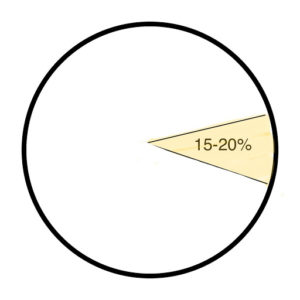
Chart of how many HSPs are in the world

What is a Highly Sensitive Person (HSP)?

Highly Sensitive People or HSP for short, is a personality trait only found in 15 to 20 percent of the Earth’s population. HSP is not a disorder! High sensitivity, or sensory processing sensitivity (SPS) is actually an inherited genetic trait. Scientific testing through a functional MRI scan showed that HSPs are genetically more sensitive to intense negative and positive triggers. There is nothing wrong with them. In fact, being an HSP is a gift. HSPs just have a sensitive nervous system, which means that they are more sensitive to their surroundings. They process more information than average and think more deeply about things. But HSPs are often mistaken for being introverted and highly emotional people who can appear to be insecure, apprehensive and depressed.

It may have its downsides, but that does not mean it is all bad. HSPs also have heightened senses and are able to notice small details. They also have a very sensitive sense of smell and hearing. Their nervous system is a lot more evolved than others which means that they are more tuned in to their environment and others feelings. So what are the pros and cons of being an HSP?

Example of a HSP barrier

Pros & Cons of Being HSP

Pros Cons
  • More considerate, polite & thoughtful
  • Highly creative and imaginative 
  • Intuitive & perceptive
  • Organised & meticulous and pay extra attention to details 
  • Make good team members 
  • Get upset easily 
  • People please 
  • Hard to make decisions 
  • Prone to illness and disease
  • Overwhelmed easily 

There are many pros and cons for being an HSP. This report will explain both.

5 Advantages of Being HSP

1) An HSP will always consider others needs and wants before their own because they can detect if others are feeling uncomfortable or distressed. Here is one example: If an HSP has a friend over for a play date, they will always consider that friend’s needs and wants above their own such as in what games to play or what movie to watch. HSPs are also very polite and well-mannered because they are mindful of not offending others.

2) HSPs are highly creative and imaginative individuals who are deeply moved by the arts and natural beauty. They see the world through a much bigger lens. Many artists, authors, songwriters and people in the performing arts are highly sensitive people.

3) HSPs are also very intuitive and perceptive individuals. They are able to read people very well and know when they are lying or being deceiving. They are also very good at noticing people’s body language and tone of voice. So, think twice before you tell a lie to an HSP!

4) Highly sensitive people are well-organised and extremely meticulous. They are very detail-orientated and always give their best.

5) HSPs make great team members because their understanding of the feelings of other team members make them considerate to everyone’s point of view.

5 Disadvantages of Being HSP

Now you know the pros. What about the cons?

1) The extreme sensitivity of HSPs can sometimes make their relationships strained and difficult because they can be easily hurt or angered. A harmless statement can become an insult. For example, you are just joking about your friend’s costume. You are just being funny but they might not know that and take offense.

2) The next con is that HSPs can often feel emotionally deprived and empty because of their constant need to care for and please others. People pleasing demands a lot of self-sacrifice. For example, when a friend is in a bad situation and they want you to do something. You may not want to do it, but you do anyway. This is because HSPs don’t want to let their friend down so they might do it even though they may not want to.

3) In addition, HSPs find it hard to make quick decisions. This is because they overthink every detail and take a lot longer to decide. For example, you are at dinner with your family and it is time to choose what you want to eat. You may choose very fast, but an HSP will take a lot longer.

4) HSPs are also prone to anxiety, depression, sleep disorders and lowered immunity. This can often lead to frequent coughs and colds.

5) Lastly, HSPs can quickly be overwhelmed if given too many tasks at one time or put under a lot of pressure at school. Tests and projects will often cause a lot of stress and anxiety.

So, these are the advantages and disadvantages of being an HSP. But guess what? There are many different types of Highly Sensitive People!

Example of Pros and Cons in the human mind

6 Different Types of HSP

Did you know that there are different types of HSP? Well, there are. Not all HSPs are the same and personality characteristics differ from person to person. Here are six different types.

1) Psychomotor. For these highly sensitive people, standing still is as challenging as climbing a mountain. Psychomotor HSPs experience an abundance of energy and enjoy intense physical activities. They can also be highly competitive and often exhibit nervous habitats such as biting their nails.

2) Sensual. These HSPs have extremely heightened senses often leading to be picky eaters. They are also at risk of becoming overstimulated very easily and need a lot of quiet time.

3) Intellectual. An intellectual HSP will ask a lot of questions and reflect on their thoughts deeply. They are very good at solving problems, recalling information and observing others carefully. This can lead them to be highly critical of others and themselves.

4) Imaginational. These HSPs have lots of notebooks filled with scribbles and drawings. They experience intense emotions and vivid dreams which can cause them to have difficulties in perceiving the differences between what is real and what is fake. They have a low tolerance for anything boring.

5) Orchid Child. According to professor Bruce Ellis, most children will survive or even thrive in whatever circumstances they encounter like a dandelion. But orchid children are more sensitive than dandelions. If brought up the right way, they will blossom into happy and productive adults. However, given the wrong circumstances they can be more susceptible to depression.

6) Emotional. All HSPs experience strong emotions, however for emotional HSPs, their emotions can become too intense and manifest in the physical such as sweaty hands, red face, increased heart rate, and upset stomach. They are extremely empathetic and are affected by the feelings and emotions of others. They also struggle to adapt to new surroundings. So how can HSPs turn their gifts into their very own superpower?

How HSPs Can Turn Their Gifts into Superpowers!

Being an HSP may have its disadvantages, but there are also many advantages to it as well. A way to refer to these advantages are superpowers. Yes, HSPs have superpowers! Not physical powers like the superheroes from Marvel or DC. They are more like mental powers.

HSPs are very empathetic. That means they feel for others strongly and can care very deeply for their well-being.

HSPs are very considerate. They are flexible thinkers, and acutely aware. That means HSPs most often notice very tiny details. This is why they pick up the feelings of those around them.

Highly sensitive people have vivid imaginations and respond more intensely to the world around them. This can make them some of the most creative people in the world. Many artists, inventors, authors, songwriters and actors are often highly sensitive people. Albert Einstein, Nicole Kidman, Katherine Hepburn, Martin Luther King, Jr., and even Steve Jobs are some famous personalities known as highly sensitive people.

Another superpower is that HSPs are sincere listeners. For example, they like to listen and talk less. It actually depends on the person. They can embrace life experiences, and finally they love deeply.
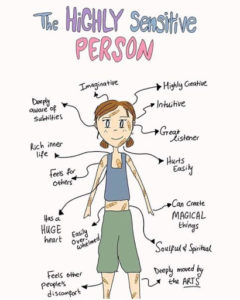
Characteristics of HSP

So, now you know about the personality trait called HSP. This report has gone over what an HSP is, the pros and cons about being an HSP, the six different types of HSP, and finally how HSPs can turn their gifts into their very own superpower. Remember, HSPs are not weird or strange; they are unique and possibly special! But an important thing to remember from this report is that to never judge a book by its cover, but by the wise words in it.
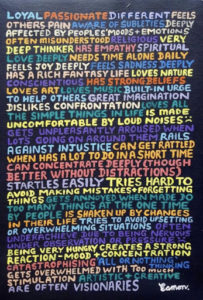
Bibliography 

https://www.melissanoelrenzi.com/highly-sensitive-people-superpowers
Melissa Noel Renzi Aug 7, 2017

https://thedailyguru.com/being-highly-sensitive/
MARGARITA COACHING 2020

https://www.youtube.com/watch?v=TPR1P_D8zjY
Psych2Go YouTube channel May 17, 2020

https://www.brighterspacesuk.com/the-highly-sensitive-person/
David Wilson 6th Jun 2019

https://pixabay.com/photos/ad-announce-announcement-barrier-1238798/
Shutterbug75 Feb 18, 2016

https://www.youtube.com/watch?v=ys6zzEqHEg4
Psych2Go YouTube channel Oct 8, 2019

https://thedailymind.com/the-pros-and-cons-of-being-a-highly-sensitive-person/
The daily mind JANUARY 14, 2021

Glossary

  • Psychologist: An expert in emotional and behavioral issues.
  • Inherited: Genetically passed down from a family member.
  • MRI: A machine that can scan brain waves even when the person is awake.
  • Heightened: More intense than others.
  • Perceptive/Intuitive: Notice tiny details.
  • Meticulous: Similar to Detail-Orientated
  • Detail-Orientated: People who are well organised and like to know where stuff is.
  • Perceiving: Seeing the difference between things.
  • Strained: Uneasy
  • Vivid imagination: Forming distinct and striking mental images

If you are a highly sensitive child or are the parent of a highly sensitive child, you might read:
“7 Things Highly Sensitive Children Need to Know to Thrive”


HSPs and Emotional Neglect: Common Struggles & How to Heal

HSPs and Emotional Neglect: Common Struggles & How to Heal

If your emotional needs as an HSP were ignored or ridiculed growing up, you‘re not alone. It’s not uncommon for HSPs to experience emotional neglect by caregivers.

As an HSP, you have unique emotional needs, most of which you arrived into this world with, due to your genetic trait. Some families have an understanding of how to support highly sensitive children. Other families lack this understanding and cause undue harm.

For the most part, we live in a culture in which sensitivity is viewed as a weakness. So, it’s not hard to see that your caregivers may have grown up receiving messages from their caregivers that any qualities of sensitivity within them must be buried or purged in order to succeed in life.

Unfortunately, this narrative gets passed down through generations. It’s damaging to all children, but as an HSP, you tend to absorb these messages in ways that can leave you feeling like there’s something wrong with you or you may even disconnect from certain emotions.

The good news is that there is nothing wrong with you and there are ways to recover from lingering wounds of emotional neglect from your upbringing without your caregivers themselves needing to change.

I’ll share some specific ways to tend to your needs as an adult below, but let’s first take a look at some common struggles of HSPs who have experienced emotional neglect to better understand how this shows up.

HSPs and Emotional Neglect – Common Struggles

Many HSPs don’t even realize their emotional needs were neglected until later in life. This is especially common if you grew up in a family that had the appearance of a functional, healthy home. They were there in certain ways; yet, your deeper emotional needs were left unattended.

As an adult, you may face these common struggles, which largely center on putting your needs and feelings last.

  • Codependency. HSPs feel emotions intensely, which can make you more susceptible to codependency. You may have an understanding of your caregivers’ painful upbringing and feel empathy for them. This empathy may lead you to organize your choices and behaviors in a way that doesn’t ‘rock the boat’ or cause discomfort or pain to your caregiver.
  • Decision-making. You may struggle with making decisions and identifying what you want because you learned to put the needs of others first and ignore yours. When you don’t learn to listen to your own voice, it can be challenging to trust your choices.
  • Setting boundaries. When you’ve absorbed the message that your needs are less important than those of others, it can be tough to discern your boundaries and speak up for your needs with confidence.
  • Feeling disconnected. Many HSPs I talk to report feeling disconnected from their bodies and any sense of self. When you’ve experienced emotional neglect, it takes time to differentiate where you and your caregivers begin and end.

In understanding these common struggles, self-discovery and listening to your own needs as the path forward comes into greater focus.

HSPs and Emotional Neglect – 4 Ways to Cope & Heal

1) Seek out support. Shed the rugged individualism narrative that says it’s all up to you to resolve your past pain. For HSPs who have experienced emotional neglect, support from others is a vital component to healing. Consider a therapist or coach who understands sensory processing sensitivity (SPS), but also explore ways to connect with other HSPs. When you connect with other HSPs, not only will you feel less alone, but you’ll naturally start to see yourself more clearly. When you see the strengths of other HSPs and have compassion for them, you also plant the seeds of self-compassion and recognition of your own gifts.

2) Get to know yourself. Emotional neglect separates you from your deeper self and who you really are because you’re so accustomed to seeing yourself in relation to others. When I say get to know yourself, I’m not saying to write a list of your passions or strengths. Rather, connect in with your heart’s deepest desires and ways of truly nourishing yourself as an HSP. Explore embodied practices that foster self-discovery. This could be meditation to listen inward, yoga practice to reconnect with your body’s wisdom, or a solo hike or introspective retreat that allows you to tune into what feels utterly beneficial for your whole self.

3) Reparent yourself. To reparent yourself is to give yourself what you needed as a child that you didn’t receive from your caregivers so that your adult self can thrive today. This can take many forms and may require the guidance of a therapist in cases of complex trauma. Reparenting may include learning emotional regulation tools, soothing younger ‘parts’ of yourself, practicing self-care, and clearly communicating your needs.

4) Set healthy boundaries. Setting boundaries takes practice when you’re not used to prioritizing yourself. It requires an ability to discern between that which belongs to you and that which belongs to the other, and an ability to own your own part in stopping a dysfunctional cycle. Get clear on balanced boundaries so that you don’t find yourself in extremes of enmeshed or disengaged boundaries. Practice assertive, non-violent communication. You may have compassion and understanding for someone and still stand your clear ground. It may not be comfortable at first and you may risk losing something or someone, but also consider what you have to gain.

The messages you received or did not receive as a child may have been painful, but you have the capacity to transform those wounds and there’s no shortage of HSP support in the world today to help you.

We have two online opportunities coming up soon if you’re looking for support and want to connect with other highly sensitive people:

Jan 30, 2021: Holding Space for Healing: A Day Retreat for HSPs
Authentic story sharing (families of origin theme), deep listening, and embodied practices to tune in with compassion for yourself and others without emotional overwhelm

Feb 13, 2021: HSP Support Circle + Qi Gong
Meets monthly – Each month features a new theme and embodied practice led by a special guest. Our theme for February is ‘Nourishing Your Sensitive System’ with a Qigong practice.