I’m Wired to Care: Here’s How I’m Sustaining My Activism Without Burnout
If you prefer to listen, I’ve also made a video: Sustaining Activism Without Burnout
Being a deeply feeling person is a lot right now. There’s a loneliness that comes with caring about things that many people around us seem to ignore or shrug off.
For me, looking away isn’t an option. My core values are dignity, justice, and moral courage. Turning away would mean a disconnection that carries its own cost, burnout among them.
Yet letting everything in at full volume isn’t sustainable. We’re not meant to take in and process this much suffering, so quickly, day after day. The question I keep returning to is:
How do I stay responsive to injustice without abandoning my well-being in the process?
I don’t have perfect answers. What I have are imperfect practices that are helping me stay engaged and intact. Some of them might be useful to you too.
Staying Engaged Without Going Under
I. Capacity
Tending to the Basics
I won’t belabor the obvious, but when I neglect sleep, food, movement, and nature time, everything else on this list gets harder. Here are a few things that help me remove friction:
- Prep and batch: Chia pudding waiting in the fridge. Dry smoothie ingredients already together in containers.
- Combine the basics: One act can meet several needs. Walking, resting in a park, or eating a meal in the fresh air.
- Build in check-ins: Setting reminders to lie on the floor for ten minutes sounds small, but it helps me reset.
- Protect the wind-down: I keep a regular sleep schedule and make time to read as part of the transition.
Stewarding My Attention
My phone charges in the living room, not my bedroom. I avoid it in the first hour of the day. That often means skipping the news altogether.
I don’t watch the news. I manage my news intake by reading longform articles from a few trusted sources. It’s gentler on my nervous system, as I can control the pace and mitigate sensory overload. Text is less manipulative than video, which uses music, imagery, and editing to provoke emotion.
When the urge to scroll hits, I think of the techno-fascist broligarchs who profit from our outrage, data, and attention. That thought helps me put my phone down.
I’ve also left activist chats that were overwhelming my nervous system to better tend to a select few. My partner is in those chats and follows the news. It doesn’t take the same toll on him. If something happens, I’ll hear about it.
Letting My Self-Care Be Flexible
Over time, I’ve learned that the kindest, and most functional, thing I can do is meet my body and mind where they are. This means letting go of rigid expectations. One question I often ask myself is:
If my body had a voice, what would it ask for?
My yoga practice is less about consistency in form and more about consistency in responsiveness. Sometimes that’s an active asana sequence, other days it’s ten minutes of pranayama or shavasana. When my mind wants to jump to the news in the morning, I meet that impulse with a book instead. Reading may come before I move my body. The order matters less, as long as I make time for both.
I’ve also raised the bar on what deserves my stress. Work has been genuinely hard this past year, and I don’t want to minimize that. But I’m learning to meet challenges with patience, noticing what isn’t worth holding onto and letting it go.
II. Perspective
Asking How I Want to Show Up
My mind can spiral into dark trajectories. But dwelling in “what if” pulls me out of the place where I have power—here, now, in how I choose to respond.
The Bhagavad Gita teaches that engaging in the world is superior to withdrawal. Key to this worldly engagement is the teaching that we are responsible for our actions but not in control of their results. I return to this again and again. I don’t know where this moment will take us. But I can do what’s in front of me with integrity and love.
When I feel pulled into reaction, I try to focus on how I want to show up within this reality. That means noticing which inputs, behaviors, and thought patterns push me toward overwhelm, and which help me remain steady. It helps to focus on where I have agency.
Seeing Beyond Our Human Lens
Human crises take up so much space. The more-than-human world continues, even under threat. Leaning into the natural world offers a perspective outside of human-caused chaos.
A herd of deer in a nearby forest preserve broadens my view. They find ways to live even after humans have encroached on their habitat. I visit them regularly, sitting at a distance and imagining the world through their eyes. Being among the deer, trees, and birds gives me a sense of belonging to something larger and older than the current moment.
This perspective doesn’t erase my grief or anxieties, but it offers breathing room.
Practicing Hope
The late scholar and activist Joanna Macy spoke about active hope as “something we do rather than have.” We generate hope and become a person who is hopeful by participating in the future we want to see, even when we lack optimism. Hope, in this sense, isn’t passive—it grows when we act and notice possibility and progress, however small.
I recently attended a lecture by historian Rashid Khalidi. Even while addressing the ongoing genocide in Gaza, he spoke of hope due to the enormous shift in public opinion about Palestine. More people than ever are not only opposed to the genocide, but are understanding the broader historical context. Awareness creates possibility. We can help grow awareness while responding to material needs (more below).
Ultimately, I’m finding hope by helping to create it with other people who care. Together, we’re actively building a microcosm of the future we want to see.
III. Action
Balancing Consumption With Action
Burnout doesn’t only come from doing too much. It can come from taking in distressing information without acting in alignment with our values.
I aim to keep consumption and action in balance. Even small acts interrupt feelings of helplessness and restore a sense of agency. I may take a short-term action tied to an issue. Often it means returning to my ongoing mutual aid and rapid response work, perhaps recommitting to a role, finding a new angle, or noticing where different issues intersect.
For example, voter suppression and immigrant safety aren’t separate issues. During recent primaries, volunteers stood outside voting centers in vulnerable communities to monitor for ICE activity so that constituents could exercise their right to vote.
Small Actions Impact People
The scale of what we’re facing can make individual acts feel futile. Yet, collective action is simply individual action, aggregated and organized. Every person who decides to act helps to strengthen our movements and build power.
On November 8, 2025, thirteen workers were swiftly (and randomly) abducted in my town. Hundreds of people took to their blocks to whistle and alert others to ICE activity. We couldn’t protect those initial people, but I know our community defense efforts helped ensure some parents return home to their children that night.
One person who brings food to a community fridge means someone eats. When ten neighbors do it, the impact multiplies. Whether you’re one or part of ten, these acts matter.
Acting Close to Home With Mutual Aid
Mutual aid is the practice of direct reciprocal care among neighbors. It’s one of the oldest forms of human solidarity, and it’s having a necessary renaissance.
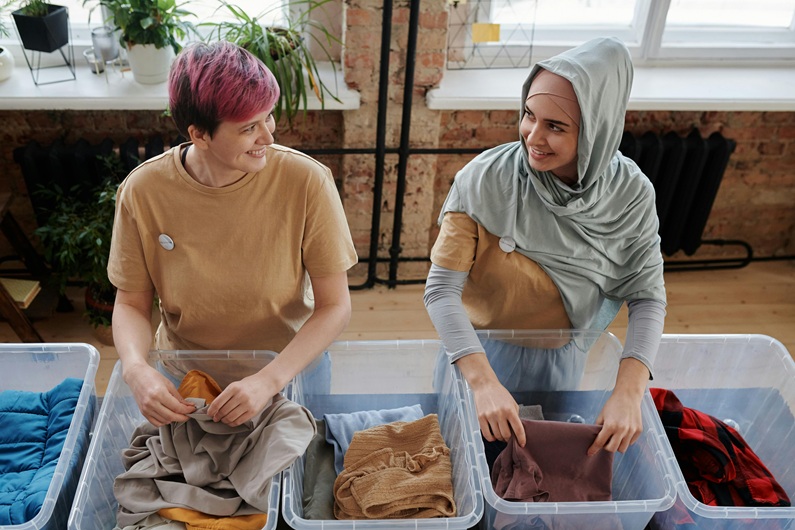
My partner and I help run a free store. Neighbors donate housewares and furniture, and anyone can take what they need. It’s an alternative economy that meets material needs, strengthens community, and keeps usable items out of landfills. I’ve watched hundreds of people leave with both what they needed and a greater sense of connection.
A few of my friends have developed a hyperlocal organizing model called Block Keepers (“B Keepers”). B Keepers organize their immediate area to share resources, coordinate mutual aid, and look out for each other. They help build community preparedness so that neighbors know who is vulnerable, who has resources, and who will show up when something happens. If you’re interested in starting something similar, the B Keepers Playbook offers practical guidance to get going (I’ve removed the contacts for privacy).
Working at a scale where I see the tangible impact keeps my hope alive.
Showing Up for the Macro Issues and Beyond Borders
While I’ve moved most of my activism locally, I also know we need to keep the pressure on the larger levers of power.
I’ve unsubscribed from newsletters in order to focus on what I can realistically do. I still follow the weekly emails from my friend Omkari Williams, who curates 10-minute actions related to current issues such as calls to senators and targeted boycotts, among others.
Gaza is always on my mind. Phone calls, boycotts, and protests remain important. I also know it’s demoralizing when our calls go unanswered. When I feel despair, I look for ways to provide direct aid. Watermelon Sisters sends 100% of donations directly to their team in Gaza to provide food, essential supplies, and art therapy for children. A trusted friend is closely involved, I’ve met the founder, and I can vouch for the integrity of their work.
If you’re able to give, you may donate to Watermelon Sisters or follow and share their work.
Knowing My Lane
Not every cause is mine to lead or join. Saying no to some things has helped me say yes to roles that match my strengths.
Last fall, I was asked to admin a rapid response chat. I said no. At first, I felt guilty, knowing everyone was exhausted. Yet, I also noticed people who seemed better able to handle the high volume of communication. What I could say yes to was organizing small-scale ICE watch teams and protocols, responding to alerts, and offering support to responders.
We bring diverse personalities, skills, and circumstances. That means the work will look different for each of us, including the unseen work that happens out of the spotlight.
Read Omkari Williams’ article: Sustainably Living the Activist Life (Part 6): Unseen Labor
IV. Connection
Leaning into Mutual Aid as Relationship
The free store is not only about things. It’s a dignifying space where everyone is welcome. We connect people to other resources, provide ongoing support, and respond to evolving needs. Some of those who arrived as shoppers have joined the team. We’ve built friendships. Relationship is inseparable from the material support of mutual aid work.
The B Keeper model works on the same principle. Community care means creating stronger systems of care in everyday life. That in itself is important, but these systems of care also set the stage to better respond to whatever the future brings.
More Connection and Less Screen Time
It’s not enough to put down our phones. For true well-being, we need connection with people willing to share and hold space for grief, joy, anger, and laughter.
Last fall, I helped organize a fundraiser that grew into unexpected friendships. We meet up regularly for storytelling events, painting classes, and even a mini weekend retreat. We also attend the heavier films and lectures.
A couple months ago, we saw The Voice of Hind Rajab (see it—with others!) , which was followed by a Q&A with one of the actors. Bearing witness—over the length of a film, in the company of others, with space to process afterward—is profoundly different from scrolling through social media images alone.
Grief, which might otherwise calcify into despair, becomes solidarity.
Trusting the Collective Rhythm
The pressure to constantly do more can come from others, ourselves, or both.
Rest isn’t a reward for doing enough. It’s what makes any of this sustainable. I’m learning to follow my capacity rather than push past it. I’m trusting that when I step back, others will carry things for a while, and that I’ll do the same for them.
That kind of trust in reciprocity is built over time, by showing up alongside people long enough to know the load is shared.
Final Thoughts
None of this is linear. Some days I feel balanced; other days, everything hits me hard.
What I return to is this:
Social change has always been driven by ordinary people. Both impacted communities and allies have found ways to resist, create, love, and endure, even in difficult conditions. Each act of care and courage might feel small, but it shapes lives now and contributes to the world we leave for future generations.
I’d love to hear from you—what’s helping you keep going right now?