I’m Wired to Care: Here’s How I’m Sustaining My Activism Without Burnout

I’m Wired to Care: Here’s How I’m Sustaining My Activism Without Burnout

If you prefer to listen, I’ve also made a video: Sustaining Activism Without Burnout

Being a deeply feeling person is a lot right now. There’s a loneliness that comes with caring about things that many people around us seem to ignore or shrug off.

For me, looking away isn’t an option. My core values are dignity, justice, and moral courage. Turning away would mean a disconnection that carries its own cost, burnout among them.

Yet letting everything in at full volume isn’t sustainable. We’re not meant to take in and process this much suffering, so quickly, day after day. The question I keep returning to is:

How do I stay responsive to injustice without abandoning my well-being in the process?

I don’t have perfect answers. What I have are imperfect practices that are helping me stay engaged and intact. Some of them might be useful to you too.

Staying Engaged Without Going Under

I. Capacity

Tending to the Basics

I won’t belabor the obvious, but when I neglect sleep, food, movement, and nature time, everything else on this list gets harder. Here are a few things that help me remove friction:

  • Prep and batch: Chia pudding waiting in the fridge. Dry smoothie ingredients already together in containers.
  • Combine the basics: One act can meet several needs. Walking, resting in a park, or eating a meal in the fresh air.
  • Build in check-ins: Setting reminders to lie on the floor for ten minutes sounds small, but it helps me reset.
  • Protect the wind-down: I keep a regular sleep schedule and make time to read as part of the transition.

Stewarding My Attention

My phone charges in the living room, not my bedroom. I avoid it in the first hour of the day. That often means skipping the news altogether.

I don’t watch the news. I manage my news intake by reading longform articles from a few trusted sources. It’s gentler on my nervous system, as I can control the pace and mitigate sensory overload. Text is less manipulative than video, which uses music, imagery, and editing to provoke emotion.

When the urge to scroll hits, I think of the techno-fascist broligarchs who profit from our outrage, data, and attention. That thought helps me put my phone down.

I’ve also left activist chats that were overwhelming my nervous system to better tend to a select few. My partner is in those chats and follows the news. It doesn’t take the same toll on him. If something happens, I’ll hear about it.

Letting My Self-Care Be Flexible

Over time, I’ve learned that the kindest, and most functional, thing I can do is meet my body and mind where they are. This means letting go of rigid expectations. One question I often ask myself is:

If my body had a voice, what would it ask for?

My yoga practice is less about consistency in form and more about consistency in responsiveness. Sometimes that’s an active asana sequence, other days it’s ten minutes of pranayama or shavasana. When my mind wants to jump to the news in the morning, I meet that impulse with a book instead. Reading may come before I move my body. The order matters less, as long as I make time for both.

I’ve also raised the bar on what deserves my stress. Work has been genuinely hard this past year, and I don’t want to minimize that. But I’m learning to meet challenges with patience, noticing what isn’t worth holding onto and letting it go.

II. Perspective

Asking How I Want to Show Up

My mind can spiral into dark trajectories. But dwelling in “what if” pulls me out of the place where I have power—here, now, in how I choose to respond.

The Bhagavad Gita teaches that engaging in the world is superior to withdrawal. Key to this worldly engagement is the teaching that we are responsible for our actions but not in control of their results. I return to this again and again. I don’t know where this moment will take us. But I can do what’s in front of me with integrity and love.

When I feel pulled into reaction, I try to focus on how I want to show up within this reality. That means noticing which inputs, behaviors, and thought patterns push me toward overwhelm, and which help me remain steady. It helps to focus on where I have agency.

Seeing Beyond Our Human Lens

Human crises take up so much space. The more-than-human world continues, even under threat. Leaning into the natural world offers a perspective outside of human-caused chaos.

A herd of deer in a nearby forest preserve broadens my view. They find ways to live even after humans have encroached on their habitat. I visit them regularly, sitting at a distance and imagining the world through their eyes. Being among the deer, trees, and birds gives me a sense of belonging to something larger and older than the current moment.

This perspective doesn’t erase my grief or anxieties, but it offers breathing room.

Practicing Hope

The late scholar and activist Joanna Macy spoke about active hope as “something we do rather than have.” We generate hope and become a person who is hopeful by participating in the future we want to see, even when we lack optimism. Hope, in this sense, isn’t passive—it grows when we act and notice possibility and progress, however small.

I recently attended a lecture by historian Rashid Khalidi. Even while addressing the ongoing genocide in Gaza, he spoke of hope due to the enormous shift in public opinion about Palestine. More people than ever are not only opposed to the genocide, but are understanding the broader historical context. Awareness creates possibility. We can help grow awareness while responding to material needs (more below).

Ultimately, I’m finding hope by helping to create it with other people who care. Together, we’re actively building a microcosm of the future we want to see.

III. Action

Balancing Consumption With Action

Burnout doesn’t only come from doing too much. It can come from taking in distressing information without acting in alignment with our values.

I aim to keep consumption and action in balance. Even small acts interrupt feelings of helplessness and restore a sense of agency. I may take a short-term action tied to an issue. Often it means returning to my ongoing mutual aid and rapid response work, perhaps recommitting to a role, finding a new angle, or noticing where different issues intersect.

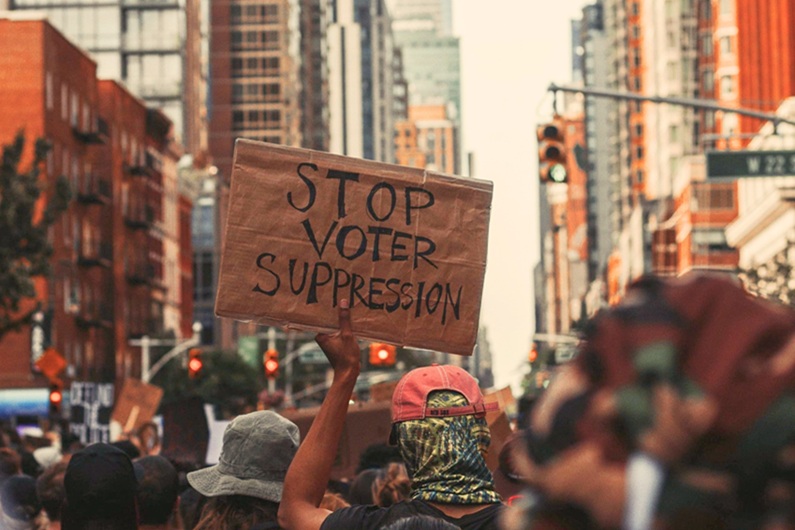
For example, voter suppression and immigrant safety aren’t separate issues. During recent primaries, volunteers stood outside voting centers in vulnerable communities to monitor for ICE activity so that constituents could exercise their right to vote.

Small Actions Impact People

The scale of what we’re facing can make individual acts feel futile. Yet, collective action is simply individual action, aggregated and organized. Every person who decides to act helps to strengthen our movements and build power.

On November 8, 2025, thirteen workers were swiftly (and randomly) abducted in my town. Hundreds of people took to their blocks to whistle and alert others to ICE activity. We couldn’t protect those initial people, but I know our community defense efforts helped ensure some parents return home to their children that night.

One person who brings food to a community fridge means someone eats. When ten neighbors do it, the impact multiplies. Whether you’re one or part of ten, these acts matter.

Acting Close to Home With Mutual Aid

Mutual aid is the practice of direct reciprocal care among neighbors. It’s one of the oldest forms of human solidarity, and it’s having a necessary renaissance.

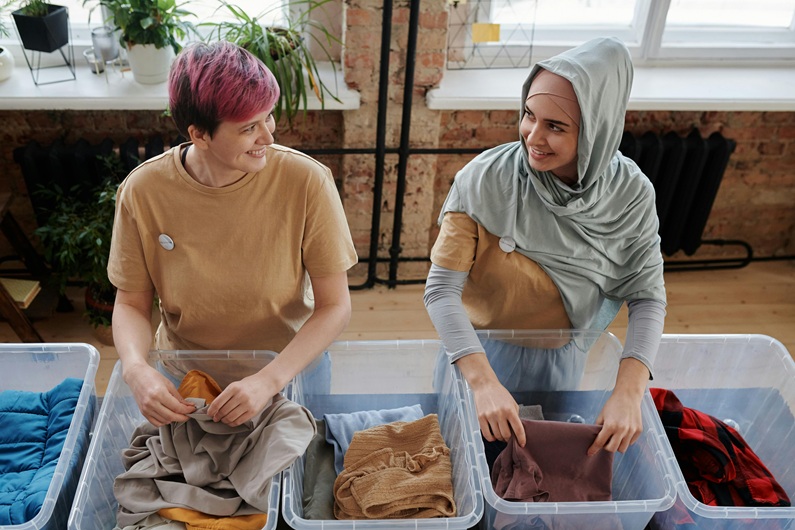
My partner and I help run a free store. Neighbors donate housewares and furniture, and anyone can take what they need. It’s an alternative economy that meets material needs, strengthens community, and keeps usable items out of landfills. I’ve watched hundreds of people leave with both what they needed and a greater sense of connection. 

A few of my friends have developed a hyperlocal organizing model called Block Keepers (“B Keepers”). B Keepers organize their immediate area to share resources, coordinate mutual aid, and look out for each other. They help build community preparedness so that neighbors know who is vulnerable, who has resources, and who will show up when something happens. If you’re interested in starting something similar, the B Keepers Playbook offers practical guidance to get going (I’ve removed the contacts for privacy).

Working at a scale where I see the tangible impact keeps my hope alive.

Showing Up for the Macro Issues and Beyond Borders

While I’ve moved most of my activism locally, I also know we need to keep the pressure on the larger levers of power. 

I’ve unsubscribed from newsletters in order to focus on what I can realistically do. I still follow the weekly emails from my friend Omkari Williams, who curates 10-minute actions related to current issues such as calls to senators and targeted boycotts, among others.

Gaza is always on my mind. Phone calls, boycotts, and protests remain important. I also know it’s demoralizing when our calls go unanswered. When I feel despair, I look for ways to provide direct aid. Watermelon Sisters sends 100% of donations directly to their team in Gaza to provide food, essential supplies, and art therapy for children. A trusted friend is closely involved, I’ve met the founder, and I can vouch for the integrity of their work.

If you’re able to give, you may donate to Watermelon Sisters or follow and share their work.

Knowing My Lane

Not every cause is mine to lead or join. Saying no to some things has helped me say yes to roles that match my strengths.

Last fall, I was asked to admin a rapid response chat. I said no. At first, I felt guilty, knowing everyone was exhausted. Yet, I also noticed people who seemed better able to handle the high volume of communication. What I could say yes to was organizing small-scale ICE watch teams and protocols, responding to alerts, and offering support to responders.

We bring diverse personalities, skills, and circumstances. That means the work will look different for each of us, including the unseen work that happens out of the spotlight.

Read Omkari Williams’ article: Sustainably Living the Activist Life (Part 6): Unseen Labor

IV. Connection

Leaning into Mutual Aid as Relationship

The free store is not only about things. It’s a dignifying space where everyone is welcome. We connect people to other resources, provide ongoing support, and respond to evolving needs. Some of those who arrived as shoppers have joined the team. We’ve built friendships. Relationship is inseparable from the material support of mutual aid work.

The B Keeper model works on the same principle. Community care means creating stronger systems of care in everyday life. That in itself is important, but these systems of care also set the stage to better respond to whatever the future brings.

More Connection and Less Screen Time

It’s not enough to put down our phones. For true well-being, we need connection with people willing to share and hold space for grief, joy, anger, and laughter.

Last fall, I helped organize a fundraiser that grew into unexpected friendships. We meet up regularly for storytelling events, painting classes, and even a mini weekend retreat. We also attend the heavier films and lectures.  

A couple months ago, we saw The Voice of Hind Rajab (see it—with others!) , which was followed by a Q&A with one of the actors. Bearing witness—over the length of a film, in the company of others, with space to process afterward—is profoundly different from scrolling through social media images alone. 

Grief, which might otherwise calcify into despair, becomes solidarity.

Trusting the Collective Rhythm

The pressure to constantly do more can come from others, ourselves, or both.

Rest isn’t a reward for doing enough. It’s what makes any of this sustainable. I’m learning to follow my capacity rather than push past it. I’m trusting that when I step back, others will carry things for a while, and that I’ll do the same for them.

That kind of trust in reciprocity is built over time, by showing up alongside people long enough to know the load is shared.

Final Thoughts

None of this is linear. Some days I feel balanced; other days, everything hits me hard. 

What I return to is this:

Social change has always been driven by ordinary people. Both impacted communities and allies have found ways to resist, create, love, and endure, even in difficult conditions. Each act of care and courage might feel small, but it shapes lives now and contributes to the world we leave for future generations.

I’d love to hear from you—what’s helping you keep going right now?

Protest Safety Tips for Empowered Action

Protest Safety Tips for Empowered Action

As people across the U.S. mobilize for the No Kings Day protests tomorrow, I want to offer a few protest safety tips to help you prepare.

Whether this is your first protest or your fiftieth, it’s worth taking the time for some important considerations. Protests can be powerful—but they also come with risks, especially as we witness increasing surveillance and authoritarian tactics, including the deployment of military force against civilians.

I know many are feeling a great deal of fear right now. That’s understandable. But the cost of not showing up to this moment is far too high. 

Protests send a clear message that we will not acquiesce or accept having free speech and due process eroded.

The protest safety tips I’ve put together are to help you prepare with care—not to create fear, but to empower you with practical tools in this critical moment.

Disclaimer: These tips are drawn from a range of trusted sources, including the links below, but are not exhaustive or expert advice. Every protest is different. Please use your judgment, assess your risk, and prioritize your safety and that of those around you.

Know Your Risk + Risk Tolerance

If you hold relative safety and privilege—if you’re white and able-bodied—this is the time to rise with courage and conscience. We need people willing to use their voices and bodies in defense of justice and each other. 

That said, everyone’s risk threshold is different. Before heading out, consider:

  • What is my current level of risk tolerance?
  • Do I have legal, medical, citizenship, or employment concerns to consider?
  • How will I respond if a situation begins to escalate?
  • Am I willing to risk arrest?
  • Am I willing to put my body on the line to protect someone more vulnerable?

General Protest Safety Tips

  • Go with a buddy or small group. 
  • Decide on a meeting point in case you get separated.
  • Know the general protest route and possible exits.
  • Stay alert to shifts in energy, police behavior, or agitators.
  • De-escalate and avoid engaging with agitators and provocateurs.
  • Follow the leadership of frontline organizers—especially those from impacted communities.

What to Bring to Protest (and What to Leave at Home)

Before You Go:

  • Write an emergency contact on your arm with a permanent marker.
  • Know your rights and how to respond if detained or questioned.
  • Wear solid colors, long sleeves, pants, and sturdy shoes.
  • Consider photo ethics and implications for privacy.
  • Decide whether to bring your phone. If yes:
    • Keep it off or in airplane mode.
    • Turn off GPS, Face/Touch ID, and use a numeric passcode instead.

Consider Bringing:

  • Water + snacks
  • ID (if you feel safe carrying it)
  • Mask or face covering (to reduce facial recognition + for COVID safety)
  • Protective eyewear like goggles (in case of tear gas)
  • Basic first aid (band-aids, saline, etc.)
  • Ear plugs
  • Vital medications (e.g., rescue inhaler)
  • External battery or charger
  • Cash

Leave behind:

  • Contact lenses (wear glasses instead)
  • Jewelry, smart watches, or items of value
  • Anything you wouldn’t want lost, searched, or confiscated
  • Unnecessary personal info—on your person or your phone

Other Resources with Protest Safety Tips

Here are two helpful resources to review and share:

This is a time to reach deep and tap into fierce love, not fear. Let’s be mobilized by what we believe in—and by the people we’re standing alongside.

A Resource Guide to Find Community, Take Action and Stay Informed — Without Overwhelm

A Resource Guide to Find Community, Take Action and Stay Informed — Without Overwhelm

Staying informed without overwhelm can be difficult when we’re flooded with distressing news. The new U.S. administration’s constant barrage of egregious actions, and executive orders is not random—it’s a deliberate strategy to exhaust us into despair and inaction.

Ignoring the news or retreating entirely isn’t the answer. We can’t afford to bury our heads in the sand. Instead, we need to be intentional about managing our news intake and where we direct our efforts. Most of all, we need to connect and organize with people in our communities.

I’ve curated this resource list with input from others. My goal is to help you stay informed without overwhelm, take action, and connect with aligned community groups. This list is not exhaustive, and I’ll continue adding to it in this Google doc.

Action-Oriented Newsletters: Stay Informed & Take Action

These action-oriented newsletters deliver concise political updates and concrete steps you can take. Each newsletter’s frequency is listed, so you can choose the right level of engagement for you.

Americans of Conscience (Biweekly) – Action Checklist and Good News updates, providing clear steps for those who value democracy, equality, and decency.

Omkari Williams’ Micro Actions (Weekly) –  Small, impactful social and environmental actions in less than 10 minutes.

Everyday Activist (Weekly) – Provides overview of key news stories without sensationalism, why the issues matter, and five concrete ways to take action.

Jessica Craven’s Chop Wood, Carry Water (Daily) Simple political actions to stave off despair, affect change, and elect more true public servants.

Nicole Cardoza’s Reimagined (3-4x/Week) – News and actions for justice and liberation.

Focused News & Thoughtful Analysis Without Sensationalism

This list features sources for focused news sources or political analysis that provide clear reporting.

Most of those listed are by individuals, whose perspectives can add valuable depth. However, getting info from one individual risks narrowing our understanding, as they’re less likely to have the editorial oversight of legacy news and other major outlets (yes, there can also be issues with legacy news). With that said, I suggest balancing these with sources such as NPR or your local public radio station

Letters from an American (Heather Cox Richardson – Historian) – Daily newsletter breaking down the day’s news into simple terms and connecting current events to their historical significance.

The Contrarian (by former Washington Post journalists) – Independent journalism offering fact-driven reporting and analysis in defense of democracy.

The Status Kuo (Jay Kuo – Lawyer) – Accessible political and legal analysis with a dose of humor. 

Thinking About… (Timothy Snyder – Historian) – Deep reflections on history, authoritarianism, and democracy from a leading scholar.

Civil Discourse (Joyce White Vance – Lawyer & former U.S. Attorney for Northern District of AL) – Clear, legally informed analysis of political and justice system developments.

The Ezra Klein Show (Journalist) – Thoughtful interviews and analysis exploring politics, policy, and big ideas shaping the world, emphasizing nuanced discussion over hot takes.

National Advocacy Groups — With Local Chapters

These progressive grassroots movements and community action groups work across the U.S., many with local chapters, so you can support climate action, democracy, and social justice in your own community.

Indivisible – A grassroots movement building progressive power through local activism.

Run for Something – Recruits and supports young progressives running for down-ballot office.

Extinction Rebellion – Global movement using nonviolent civil disobedience to push for government climate action.

Showing Up for Racial Justice (SURJ) – A national organization that mobilizes white people to fight for racial and economic justice.

ARC-Southeast – Provides funding & support for Southerners to access reproductive care.

100 Women Who Care – A giving circle where members donate quarterly to local nonprofits.

The (Sojourner) Truth School – Free movement-building training for social, economic, and environmental justice.

Local Advocacy & Mutual Aid Groups

A start to a list of local initiatives and mutual aid groups—offering everything from elder support to food justice to migrant assistance. Email me, if you’d like to add a local group. You may also try the following resource for Mutual Aid Networks in your area.

Village Neighbors (Western MA) – Helps elders age in place and stay connected to their community.

Beloved Asheville (Western NC) – Community organization providing support such as food, housing, medical and mental health care to underserved communities.

A Bedside Campfire: (Chicago) – A virtual/in-person group connecting caregivers and care recipients for support and community.

Migrant Ministry: (Oak Park, IL) – An interfaith volunteer effort supporting migrants with clothing, essentials, ESL classes, access to social services, help with asylum applications, and legal rights education. 

I (Melissa) am also part of a related but informal mutual aid effort helping newcomers. You may reach out to me directly if you’d like to get involved.

Beyond Hunger: (Chicago) – A nonprofit addressing food insecurity through pantries, nutrition education, and empowerment programs.

This list was compiled by Melissa Noel Renzi. If you have suggestions for additional resources, send them to info@melissanoelrenzi.com. Specifically, I’d love to know about mutual aid groups in your area and suggestions for BIPOC journalists providing news summaries.