
Updated October 9, 2026.
If you’re like me, your inbox is flooded with requests to join phone banks, canvassing efforts, and countless other calls to action.
Many introverted and highly sensitive people dread approaching strangers or making phone calls. There’s value in stretching our comfort zones, but there are also other things we can do.
If you enjoy talking to strangers, by all means, get out there and knock on doors. If you live in or near a swing state, you might even consider traveling to campaign for a candidate. (I’m considering a trip to Michigan to knock doors for Abdul El-Sayed.)
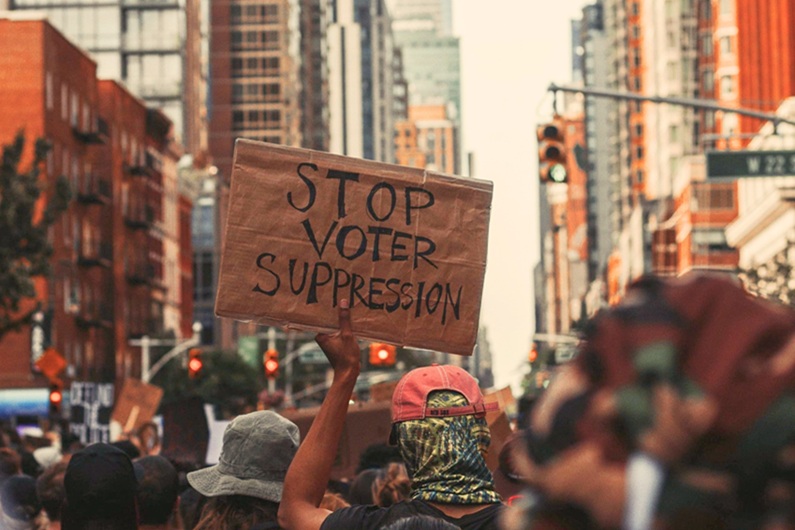
But if phone banking and canvassing aren’t your thing, there are other ways to get involved. This is my attempt to cut through the noise with a curated list of ways to protect voting access—from simple actions you can take at home to in-person volunteering and resources you can share with your community.
10 Ways You Can Help Protect Our Elections
1) Save These Hotline Numbers
The nonpartisan Election Protection coalition operates voter assistance hotlines in multiple languages. Voters can speak with trained volunteers who can help address voting questions and problems. If you witness voter intimidation, irregularities, or other barriers to voting, contact the hotline to report what you’ve observed and get guidance.
- 866-OUR-VOTE (English)
- 888-VE-Y-VOTA (Spanish)
- 888-API-VOTE (Chinese, Vietnamese, Korean, Bengali, Hindi, Urdu, Tagalog)
- 844-YALLA-US (Arabic, 844-925-52872)
2) Know Your Voting Laws
Voting rules vary by state. Familiarize yourself with your state’s voting rights and Election Day rules, and share that information with others. The Election Protection coalition offers a detailed guide regarding your voting laws.
3) Help Others Find Reliable Voting Information
Confirm your own registration. Then help a friend, family member, or neighbor do the same. A quick reminder can help someone catch an issue early. VOTE411, a resource from the League of Women Voters, lets you check your voter registration, see what’s on your ballot, find your polling place, and look up early voting and mail-in ballot information.
4) Find Local Election Protection & Organizing Efforts
Help voters at the polls: Common Cause’s Election Protection program offers opportunities to support voters in person at polling places. These roles focus on helping people navigate the voting process and access the assistance they need.
Connect with local organizing networks: Local groups may also organize poll protection efforts, particularly in communities affected by ICE activity. If you’re interested in monitoring, observation, or rapid response, look for local groups offering relevant training so you understand your role, the law, and safety considerations.
5) Vote Early—and Attend a Vote Early event
No Kings is organizing Vote Early events across the country on October 17th. This is a coordinated day of action focused on driving early voting. These events may also be a way to meet local organizers and learn about other opportunities to get involved.
6) Become a Ride2Vote Hotline Operator
Getting to the polls can be a barrier for many voters. Ride2Vote coordinates rides to help people get to their polling places, and hotline operators help coordinate those rides. I haven’t done the training yet, but it appears to involve coordinating rides rather than making unsolicited calls. That may feel more manageable for some people.
7) Help Voters Cure Their Ballots
When a mail-in ballot has a fixable issue, voters may need to take additional steps to ensure it gets counted. Ballot cure volunteers contact voters to help them resolve those issues before the deadline. Other opportunities focus on voters whose ballots may arrive too late.
According to Ballotpedia, citing the U.S. Election Assistance Commission, “In the 2024 election, 585,457 absentee/mail-in ballots entered the cure process, accounting for 1.5% of returned absentee/mail-in ballots nationally.” Of those ballots, 317,191 were successfully cured by voters, according to the 2024 Election Administration and Voting Survey.
Yes, this role involves making phone calls, but it’s an important one! Besides, helping people navigate the voting process feels different to me than calling on behalf of a candidate. I’ve signed up for a few shifts myself.
Team Michigan offers ballot cure phone banks, with a 45-minute training for new volunteers followed by 1.5–2 hours of calls.
8) Become a Poll Worker
Poll workers help administer elections, assist voters, and keep polling places running. This is distinct from election monitoring. It’s an official election-administration role, with eligibility, training, and scheduling requirements set by local election authorities. They are typically paid opportunities, at least they are in Illinois.
I served as an Election Judge in 2020 and recommend every U.S. citizen serve in this civic role at least once. It will also help you see just how much oversight is set up to maintain election integrity.
9) Print and Share this “ICE at the Polls” Zine
Indivisible has created a printable zine explaining what to do if you encounter ICE at a polling place. You can print copies to share with friends, neighbors, and your community so more people know where to find guidance.
10) Help Neighbors Overcome Barriers to Voting
Sometimes, helping someone vote is as simple as making it easier for them to get to the polls. Offer a neighbor a ride, help with childcare, or accompany someone who needs support. These small acts of mutual aid can make a real difference in helping people participate. Think about what you have to offer, and ask people in your community what would be helpful.
Choose 1-2 Things You Can Do to Protect the Polls
Our elections are under attack, and it’s easy to feel overwhelmed by the constant stream of requests to take action. But you don’t have to do everything.
Take a few minutes to assess how much time and energy you may realistically have over the next few weeks. Maybe you volunteer for a ballot cure phone bank once per week and monitor the polls on election day.
Choose one or two actions that feel manageable. If you have more capacity, you can always do more. Protecting our elections is a collective effort. Every contribution matters.
Looking Beyond Election Day
Protecting our elections matters and fighting voter suppression matters. Yet, elections are only one part of building a more just and democratic society. We need to stay engaged and build collective power that extends beyond the ballot box.
You may want to read: From Electoral Disillusionment to Building Power Beyond Elections
Know of a poll protection opportunity I should add to this list? Leave it in the comments!

0 Comments