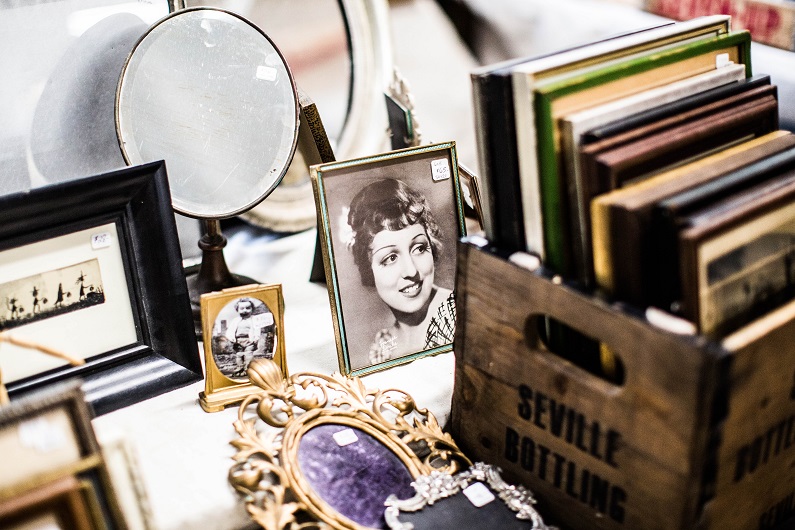

Generational Junk #2: How to Keep Your Junk out of Landfills
Are you looking to get rid of old generational objects, but want to keep your junk out of landfills?
If you’ve followed my work lately, you know that I’ve opened up a conversation about “generational junk” in its many forms with one of those being heirlooms, collections, and mementos that can become burdens that we unwillingly inherit and unwittingly pass down.
When you begin to examine generational junk you’ve acquired, you may realize it’s time to let some things go to avoid passing down the burden of too much stuff to future generations.
There may be emotional processing that is needed to part with these objects, but there’s also a practical aspect for HSPs who care about environmental impact.
Isn’t tossing junk into landfills also burdening future generations?
One of my yoga students recently brought this up to me. It’s a good question, and one that I think about a lot.
I’m not an out of sight, out of mind person. I can’t stand sending something to a landfill if I think there’s a chance it can be of use or value to someone else.
Even if not visible, our waste affects communities somewhere, as well as the animals, watershed, and the very food we put in our bodies.
While I don’t have solutions for every item, I want to share some practical ideas that may help keep some of your junk out of landfills, as well as what to do when you can’t.
Before I go on, I believe there’s an important perspective we need to keep in mind.
Individual Actions Matter, But We Need Planetary Change
By all means, it’s important to reduce what comes into your home, repair and repurpose what you can, recycle properly, and keep your junk out of landfills when possible.
Your individual actions matter and ought not be dismissed. We should each do our part to reduce our environmental impact and find ways we can make nature a bit happier and healthier.
Yet, HSPs can get bogged down feeling the pain of the world and analyzing every choice. Without some balance, you may end up depleting your reserves that could otherwise influence the larger systemic changes we need to prevent the burden from falling on individuals in the first place.
Notice how much of your energy is going toward making the “right” or “responsible” choice. You may need to move forward with letting some stuff go for your mental health. Then, perhaps you can redirect your energy into action with a local or national effort working to solve climate change.
6 Tips to Keep Your Junk out of Landfills
What you do with your generational junk may depend on a few factors such as:
- The overall condition of the object
- Whether it’s personal or impersonal
- If it can be used for its parts or has DIY potential
- The emotional attachment you have to it
- Where you live
The following are a mix of suggestions shared by a circle participant who works with museum collections, my partner, and of course, my own ideas.
I want to note that some resources I share are based in the U.S. since this is what I know. Many of you in other countries are already way more creative and resourceful with how to repurpose waste, particularly if you don’t have the luxury of it being invisible.
1) Exchange / Gift Economies – With sites like Buy Nothing or Freecycle, you can give items to neighbors who can use them and ask for things you can use. We just stayed with a friend who got everything in his home from his Buy Nothing community with the exception of a few items. You may not be able to unload your musty stuffed animals on your neighbor, but someone may be interested in your childhood wall hangings, collections, or antiques.
2) Curb Alerts – Put out a free pile and announce it on Nextdoor or FB Marketplace. Putting unwanted items out a few days before garbage pickup gives time for someone else to pick it up. The person I referenced earlier left a broken lawnmower on the curb. Someone came by with the same broken mower and figured he could repair his with the parts. She was delighted to keep one mower out of the landfill (for now) and that it could help someone else.
3) Specific Drop-Offs – How much time you invest in finding homes for items depends on your bandwidth, but here are a few ideas. Batteries Plus offers electronics recycling (may charge a small fee over a certain weight) if your municipality does not. Libraries and historical societies may take yearbooks and other historical records. Leave anything metal out for those reliable scrap metal folks. You may be able to donate CDs and DVDs to shops that sell used ones.
4) Change it – Baby spoons can become jewelry. Nostalgic artwork you’ll never hang can be taken out of frames to save space. Baby blankets and book sets can be yoga props. I’ve seen Star Wars pillow cases and button-down shirts turned into skirts and historic newspapers turned into bags.
5) Keep it. Not every object needs to be purged and not every human needs to be a minimalist. The guy with the packed car who took a bunch of free stuff from our garage sale may keep those items out of the landfills for a few more decades. It’s okay to keep things that are meaningful to you. It’s not always a burden. You might find a spot for a special memento that serves as a symbol of what’s important to you, as well as a reminder to refuse and reduce the new junk that has potential to enter.
6) Rituals – Some things may just be gross and need to go. Yet, if the object held meaning for you or someone else, you may struggle to let it go. Honoring an object (or person) through ritual can help with closure. You could share stories about it with loved ones or tune into what deceased ancestors might like you to do. You can burn it, wash it, or sing it a song. Even if it needs to go in the garbage, you could place flowers or sprinkle soil on top of it as a gesture of care.
Remember, show yourself some compassion and leeway in this process. Your individual choices and actions matter. Keeping your junk out of our landfills is important, but there are also many ways to get involved and support the health of our planet.
Read: Generational Junk #1: Examining What We Pass Down
(Photo by Pierre Bamin on Unsplash)