

To My Younger Self: Lessons on Grief, Love, and Courage

To My Younger Self: Lessons on Grief, Love, and Courage

One of my retreat participants invited me to contribute to her writing project, Dear 25-Year-Old Me. At first, I procrastinated, unsure where to begin. Then I remembered—25 was the year my mom died. What started as a simple reflection became something deeper, more cathartic than I expected. In the end, this letter felt like a gift to me. I’m sharing it here in case some part of it feels like a gift to you, too.


Dear 25-Year Old Melissa,

This will be the hardest year of your life. God, what an awful start to a letter—but it’s true.

It will be the last time you see your mom.

In your final visit, you will hold her, searching for familiarity in a body and spirit that feels so foreign. She’ll express longings to travel with you to India and to mend your relationship. You’ll assure her.

Deep down, you’ll feel the truth.

The dynamic between you will grow treacherous.

It’s okay to step back.

Save yourself.

Read those words again, Lissie Lou.

Sadly, her departure will come like a strike of lightning—shocking and devastating—leaving you with far more questions than answers. You will carry guilt despite the chorus of voices telling you to release it.

Let it be. Sit with it. In time, you will set it down.

You’ll wonder how life can continue, how you can finish school when the ground beneath you has disappeared.

Keep going. Your resilience will unfold. 

Make peace with the unknown.

You will spend years untangling her life, trying to understand her pain. Many questions around her life and death will remain unanswered.

The more you confront your own truths, the more clearly you will see hers.

Look out for those selling certainty.

Understand that healing isn’t linear.

There are no panaceas, no shortcuts.

Life is a messy, unpredictable process—which also gives it texture and meaning.

Let yourself stumble into places you never thought you’d go. Try on different ways of showing up to the world—some will fit, some won’t. 

You will struggle to commit in relationships. Some will make you want to pull your hair out.

Wait for a gentle soul who listens deeply, who feels like home. 

Next year, you’ll have your first Black president.

Work hard to elect him, but don’t stop there. Never pin your hopes on one person.

Stay engaged.

He will accomplish great things. He will also disappoint you. You will feel disillusioned. But he was always just one man. 

For a mature, nuanced view of the world and political systems, watch The Wire. Give it at least five episodes. 

The political road ahead will be more harrowing than you can fathom now. The ugly underbelly of the country will rise louder and emboldened.

You will feel rage.
You will feel scared.
It will hurt like hell.
You will struggle hard with your family.

Don’t turn away.

Keep your commitment to justice, to humanity, to our planet.

Bear witness. Do what you can.

Center love and joy in your activism. Let go of the outcome.

Seek community.
Nudge your edges.
Show up to the event when hiding feels easier.
Protect the vulnerable.
Share what you have with strangers.
Hold healing spaces.

Diversity. Equity. Inclusion.

No matter what they say.

Be present with the land.

Listen to the trees.

Nurturing the plants and pollinators will nurture you. When you feel alone, there’s belonging and nurturance in the forest.

Make time for friends and family. Laugh with them. Tell them you love them—even the ones you don’t understand. See their strengths. Allow space for contradictions.

Love your dad. Have patience.

But trust yourself.

Your sensitivity is the thread of your mom’s heartstrings, still running through yours.

Carry it with care. 

Tend to your nervous system.
Embrace your senses, your emotions, your deep thinking.
Nurture your body.
Get curious with your mind.
Be kind to yourself.

Love your brain. Teach others to love theirs.

With Love,
43-Year-Old Melissa


You may wish to read:
How I Learned to Stop Absorbing Other People’s Emotions
Navigating Collective Grief as Highly Sensitive People
A Guide to Balancing Social Action and Self-Care During the Holidays
Navigating Collective Grief as Highly Sensitive People

Navigating Collective Grief as Highly Sensitive People

In today’s world, we’re exposed to an unprecedented level of collective trauma, resulting in significant collective grief as highly sensitive people. As deep feelers, we may hesitate to acknowledge the grief we feel about issues that seem beyond our control, fearing emotional overwhelm. However, avoiding or suppressing our emotions can lead to greater distress and hinder our ability to take meaningful action.

Understanding Collective Grief

Collective grief is the emotional response that emerges when large groups of people experience a common loss or trauma, such as a climate disaster or social injustice. Unlike personal grief, which an individual feels after a personal loss, collective grief affects communities and societies.

Feeling collective grief as highly sensitive people can be challenging. Our deep empathy and emotional processing mean that we feel the world’s suffering intensely. Yet, being able to sit with the pain of others serves as a powerful reminder of our shared humanity.

Collective grief plays a crucial role in societal healing, reminding us that our emotional responses are not isolated. When communities grieve together, they create space for shared understanding and support, which leads to stronger, more resilient societies.

The Work That Reconnects: A Framework for Collective Grief

The Work That Reconnects (WTR), developed by environmental activist Joanna Macy, offers a powerful framework to respond to our current social and ecological challenges. I believe this model can be particularly helpful for highly sensitive people.

Recognizing widespread despair about the climate crisis, and intersecting justice issues, WTR provides a path to embrace grief and build resilience. It does this through practices designed to reconnect us with ourselves, humanity, and the non-human world, fostering belonging and strength. When we recognize our interconnectedness, we’re more empowered to act on behalf of life.

Although the WTR was created to disrupt the dominant cultural paradigm and transform our relationship with power, parts of its framework have also carried unexamined biases and harms rooted in colonization and white culture. In recent years, leadership from People of the Global Majority and the Anti-Oppression Resource Group have helped the WTR community more intentionally engage in undoing oppression and centering collective liberation within the Work.

Four Stages of the Work That Reconnects Spiral

WTR follows a spiral process to continually deepen our ability to be with pain and respond effectively.

1) Gratitude: The spiral begins with gratitude, acknowledging the beauty and interconnectness of all life. Grounding in gratitude strengthens our foundation and resources to face pain and grief. We also tap into a deeper satisfied self, liberating ourselves from the grip of systems that tell us we’re inadequate.

2) Honoring Our Pain: This involves recognizing our pain for the world and becoming aware of our reactions. Feelings of sorrow or anger are normal, healthy reactions to collective trauma and suffering.  Experiencing our grief with others can enable us to feel solidarity.

3) Seeing with New and Ancient Eyes: Here we recognize that our collective grief stems from our intimate ties to all life. Through contemporary and ancestral wisdom, we gain a clearer view of our place in the web of life. We situate ourselves within deep time, an expansive perspective that links us with past and future generations. This means releasing the need for immediate outcomes and committing to life-sustaining actions that go far beyond our lifetimes.

4) Going Forth: This stage harnesses our resilience developed in earlier stages to move from inner work to outward action. It involves identifying your role and methods for contributing to collective healing and cultural transformation, based upon your unique strengths, skills, and where you’re called.

Practical Application for Collective Grief as HSPs

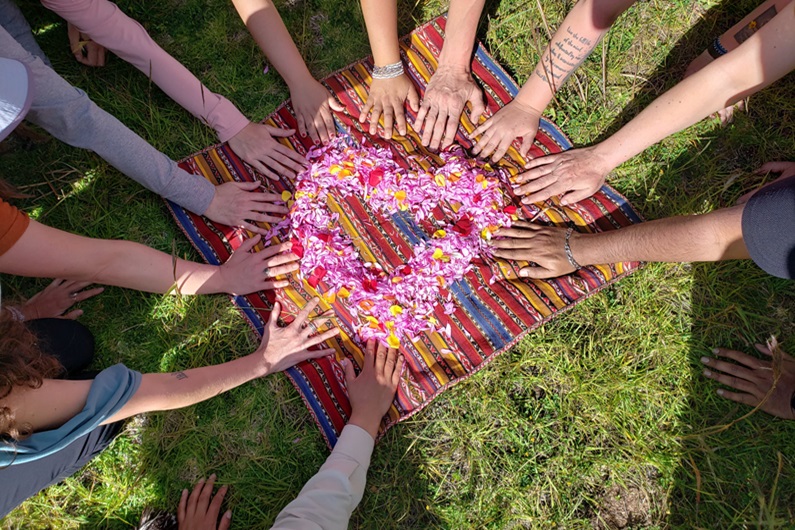
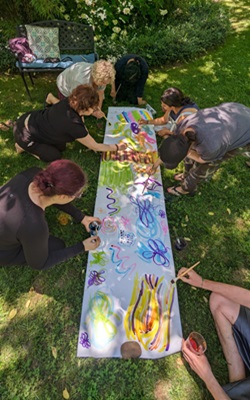
WTR is woven into many of the nature-based expressive arts and ecotherapy practices that I facilitate in retreats and online circles. During a recent retreat in North Carolina, I invited participants to engage in practices designed to help them embrace emotional pain and collective grief as highly sensitive people—without getting stuck in it. These practices included gratitude, a grief ritual, interactive nature connection, embodied movement, and collective art.


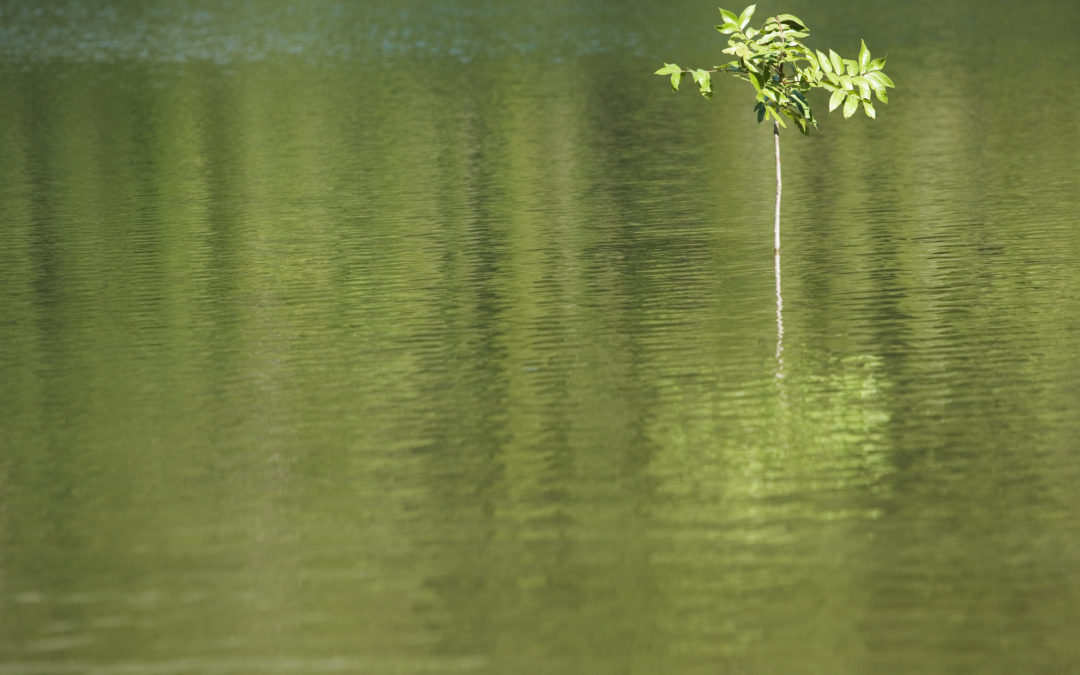
Initially, most were hesitant about the grief ritual. Some opted out, which was just fine. Naturally, those who did participate expressed sorrow and heaviness when we debriefed this practice.

Yet, in the end, everyone agreed that naming their grief was important. Furthermore, they were surprised by how the subsequent practices significantly shifted their moods and perspectives. They all reported feeling something along the lines of lighter, hopeful, connected, or empowered.

Applying This Work in Your Own Life

If you’re a highly sensitive person struggling with collective grief, consider incorporating these practices into your life.

Perhaps you spend a moment grounding in gratitude before reading the news. Maybe you set aside time each week, alone or with a loved one, allowing your collective grief to flow freely. Or maybe you join a community of people with similar struggles and build meaningful connections.

By embracing your nature as a feeler, you can create a nurturing space to experience your grief. The gifts of highly sensitive people are needed now. With supportive tools and community, we can transform our pain into meaningful, life-giving action.

To learn more about the Work That Reconnects, I recommend these books by Joanna Macy:

A Gratitude for Grief Meditation to Transform Your Loss

A Gratitude for Grief Meditation to Transform Your Loss

Can I share something personal with you?

My grandma passed away over the weekend. I’ve lost two grandmas and my stepmom this year. Having lost my mom, stepdad, and grandpa in the last decade, sometimes it feels like the people I love are constantly dying.

I’ve found a way of reframing my perception of “constant loss” that helps me to transform my grief into an experience I can bear. I’ll share this approach, as well as a meditation to help you, in a moment. But first, let’s look at loss.

What happens when you lose someone you love?

Losing a loved one is a life-altering experience. If you’ve lost a loved one, you’re familiar with the visceral pain of grief.

The grieving process varies for each person. It may include feelings such as anger, abandonment, sadness, anxiety, and guilt. And for the empaths out there…well, you may absorb a mixed bag of emotions from grieving loved ones in addition to your own, leading to more confusion and overwhelm.

Grief certainly isn’t linear. Grief ebbs and flows like waves of the sea.

But when a painful flood of emotion comes, we may feel despair and powerlessness. Grief can feel traumatic to the body. You may have difficulty breathing. Tension may gather in the abdomen, chest, or throat. Your immune system may weaken.

The way we carry emotion can make it challenging to step out of intense sadness.

While it’s vital that we allow ourselves to feel the full spectrum of emotion, it also helps if we can find meaning from our experience.

When I find myself heading into an abysmal sadness, I reframe my loss.

Is it possible to feel gratitude for grief?

It may sound strange, but gratitude for grief is possible and transformative.

All of the losses I’ve experienced are reflective of the connections I’ve had in my life. These people I’ve loved and who have loved me have imparted many gifts for which I’m grateful.

Having worked in the child welfare system, I’ve known way too many children who literally have no one in their lives to lose other than a caseworker or therapist. Having no one to lose is a much more tragic in my opinion.

When I view loss in this way, my perspective begins to shift to gratitude for grief, which has a profound effect on my physical energy and mental health.

Gratitude is a practice that can transform our beliefs, thoughts, and behaviors if we spend some time giving thanks from the heart.

I’ve recorded a guided gratitude for grief meditation for you based on the Buddhist “metta” lovingkindness meditation. The lovingkindness meditation invites the feeling of compassion. In this meditation, I’ve replaced compassion with gratitude.

Listen to: Gratitude for Grief Meditation

Happy Thanksgiving to you and your loved ones.

Mindful Camino Lesson #4: You must prepare for spontaneity

Mindful Camino Lesson #4: You must prepare for spontaneity

“You must plan to be spontaneous.” – David Hockney

A couple years ago, I attended a workshop taught by James Boag, who teaches applied yoga philosophy. He mentioned the above quote and it’s been with me ever since. Yet, I began to understand it at a deeper level while walking on the Camino de Santiago.

I’ll explain what I learned on the Camino, but first, let’s take a look at preparation and spontaneity.

If you’re a planner, you might be drawn to having an element of control and certainty in your life. But you may also know the limitations of trying to prepare and account for every detail of a life trajectory, event, and so forth. Plans often go awry and require improvisation and adjustment.

If you’re a fly by the seat of your pants kind of person, you might avoid planning. You might take risks simply trusting that things will work out. After all, you want an opportunity to change your mind and join the adventure of life.

And then maybe you’re a bit of both like me. You see, I’m a planner. I like my life to be organized and I prefer to know what’s coming on my calendar. Anyone who has known me as a colleague or partner would attest to this. At the same time, spontaneity fills me with a sense of adventure and I like the freedom I feel when I’m spontaneous.

The thing is, I haven’t always integrated these two parts of me into the balance I think is necessary.

What I Learned About Spontaneity on the Camino de Santiago

Many people take a year to prepare to hike a journey like this. It requires some diligent planning with respect to logistics, packing lists…and physical preparedness.

I booked my ticket just two months before my departure. And while I spent some time on logistics and loads of time packing, I did not give adequate attention to my body.

My weekend hikes did little to prepare me since the Midwest is mostly flat. Yoga and occasional biking may have done something. But I failed to engage in regular weight-bearing exercises, as well as see a doctor before leaving (the knee issue was not new).

Instead, I remembered my 29-year old body hiking a five-day trek in Colombia with challenging inclines and long days. I remembered my 27-year old body hiking straight up volcanoes for hours in Guatemala. I conveniently avoided thinking about my 33-year old knee that cried out in pain two years ago while hiking through a canyon in Utah with a heavy pack. I really assumed that if I had some initial pain on the Camino, my body would adapt eventually. And I was wrong.

But here’s the thing. What I came out of that experience realizing was not just I need to prepare extensively just before a trek like that, but that I need to prepare all year round. That is, if I want to be spontaneous when I’m called to adventure, I have to already be prepared in my body. This means I start now–well, as soon as I get medical advice on my knee.

Thankfully, there’s a part of me that was very prepared during my Camino…

The Deeper Reason We Must Balance Spontaneity and Planning

It’s become increasingly apparent to me that the balance between preparation and spontaneity is vital to living a healthy, full life. And I’ll tell you why.

There’s the obvious reason that too much impulsivity can be destructive, like in the example of the Camino. And rigidity can be too. Trust me, if I were married to my plans going exactly as hoped for every retreat I lead, I’d be a mess.

But I do see preparation as something we must do physically, mentally, and emotionally every step of our lives so that when our plans for life go off course, we can adapt without overwhelm and debilitating anxiety.

I think back to the months leading up to my stepmom’s passing earlier this year. My dad would often talk about how he was preparing for an emotional marathon by way of his workouts and seeking support from loved ones. This was his way of planning to survive the loss.

I, too, have undertaken a lifetime of mental preparation for various challenges to come in my life.

My mental strength was not enough to get me through the Camino physically. It got me through the pain for a while all right, but it couldn’t overpower the cry from my body telling me to stop. In this sense, my mind was more than I could ever have asked for in helping me arrive at the decision to stop my Camino. Trust me, that was one of the largest challenges.

If I can recommend one piece of advice for preparing for spontaneity it is to take time for self-care. That is, take time to get to know yourself–your emotions, your mental tendencies, your body. And then take time to nourish each of those areas of your life.

Mindful Camino Lesson #2: Pain is a Teacher

Mindful Camino Lesson #2: Pain is a Teacher

Today I’d like to share a few ways I see pain as one of my greatest teachers.

If you’re human, you’ve experienced pain… many kinds of pain. Loss of a loved one. A broken bone. A break-up. Discrimination. Chronic illness. Bullying. An absent parent.

Sensitive people can be particularly affected by pain. We’re more susceptible to stimulation, and we feel it on multiple levels.

That said, we also have a special skill in transforming pain into the fuel that makes our lives meaningful. I saw this within myself during my recent knee injury while hiking the Camino de Santiago. When pain struck, I used it to learn and make sense of my experience.

So what does pain teach us?


1. Pain teaches us resilience.

Sometimes it feels like it’s too much to bear. You may know that feeling intimately.

My knee pain was excruciating, but it paled in comparison to the sudden loss of my mother. Yet, the physical pain on my Camino reminded me of just how much we can endure, particularly if we have healthy coping skills at our disposal.

I met a German woman one day. In the few minutes we chatted, I learned she was carrying her husband’s ashes. He had hiked the Camino de Santiago annually since 2009 until his passing in 2016. This was powerful for me, as the thought of losing my partner is something that makes me anxious. Her sense of ease in carrying him with her made me realize just how strong we really are.

When we can sit with the challenges of our lives and incorporate it into our sense of strength and resilience, we become empowered beings that can handle almost anything.

2. Pain teaches us to listen.

It alerts us to a problem and urges us to listen.

It would have been wise to listen to my body sooner. But I was intent on finding a solution so I could keep walking. Meanwhile, I ignored the call from my body to take rest and made it worse.

Far too often we ignore the physical and emotional pain of our lives. We cope by working harder. We turn to alcohol and drugs as a temporary fix. We’re too good for our own good as we frantically help others while ignoring ourselves.

One of my yoga teachers, Morgan Lee, once said to listen to yellow lights to prevent injury. I’ll take this further and say that yellow lights come in many forms. Sometimes it’s a warning from your body. But maybe it’s a sign that you’re overloading your plate. Or maybe it’s a sign that it’s time to let go of that relationship that feels destructive or imbalanced.

3. Pain teaches us presence

On the Camino de Santiago, it’s very easy to get into “pilgrim mode” of walking quickly without taking time to talk to a local or notice the purple flower growing out of the ground. My injury forced me to pause and appreciate the beauty around me. And when I took the time to notice something other than myself, it helped me manage my pain.

Emotional pain is no different. When we power through or ignore it, we often miss an opportunity. If we allow ourselves to feel pain, then we can tap into a collective experience that all living beings share. When we are present with pain and notice how it shows up, we have an opportunity to reflect and transform it.

4. Pain teaches us gratitude

I caregive for a woman who had a stroke five years ago and spends her days sitting in a chair. She and her husband used to hike and travel all over the world. Now he goes alone.

While she has good days and bad days, she frequently talks about being thankful for her family and travel experiences. She’s thankful for the days when she’s not in as much pain. I thought of her a lot during my Camino.

I felt grateful for my ability to walk despite the pain. I felt grateful for the moment. I felt grateful for my breath, my eyes, and my ears. I felt grateful for the earth and trees, and all of the things that are more powerful than pain. I felt grateful for the small moments I photographed (see below).

Ultimately, that gratitude is what led me to stop my Camino. I thought of this woman and how her Camino shifted to an “inner camino” years ago.

That, my friends, is what the Camino de Santiago is all about for me. It was never about arriving, but about how we face ourselves and live as the highest expression of who we can be.

What have you learned from pain in your life? I’d love to hear from you if you feel inclined to share.

When Panic Attacks Strike: Simple Steps to Finding Relief

When Panic Attacks Strike: Simple Steps to Finding Relief

Trigger warning: While this post limits details, it might be triggering to those who have suffered traumatic loss, a panic disorder, etc.

Have you ever felt like pain from the past was behind you only to have it smack you in the face many years later?

Well, that's what happened to me last night. I hesitated to share this story today out of fear of what you guys might think of me. You know, I'm here to help other sensitive folks like me transform anxiety. Don't I have this thing figured out?

The truth I faced last night is that while I've learned to manage anxiety quite well most of the time, there are moments that even I feel out of control. And this was no everyday anxiety. This was trauma that had resurfaced.

"Two steps" in an article sounds sort of funny to me, as two sounds like such a sad little number. Like there should be just one or three. But this is from my very real experience and I thought I'd share it with you despite it feeling incomplete. Here's what happened...

I hadn't had a panic attack in years, but here it was.

I've had difficulty sleeping in the last week or two. Jason and I usually go to bed at 9:30 (I know, so old) and our schedule has been screwy. My mind has been astir almost every night, so I turned to books (Radical Acceptance by Tara Brach & Help Thanks Wow by Anne Lamott, if you want recommendations). Both the act of reading and the content of the books helped me relax.

But last night was different. This time my mind somehow landed on a conversation my brother and I recently had about my mom's death.

On August 5, 2017, it will be ten years since we lost her. My mom died a sudden death and I don't want to go into the details in this article. But what I will say is that there were a lot of "unknowns" surrounding her passing. Most days I feel like I have come to peace with these unknowns. Last night was different.

I went down the rabbit hole into some dark and startling places. I immediately began bawling and suddenly I couldn't catch my breath. My chest felt tight and my head throbbed. My heart was beating rapidly and I felt like I was going to die. I had forgotten just how awful this level of panic is.

Jason was asleep in the other room and I didn't want to wake him, so I frantically flung myself onto the back porch.

I sat on the couch and after a few minutes started to find relief.

I attribute the relief of this particular panic attack to two things.

1) Tapping

If you haven't watched my video series on techniques to release anxiety, you can view this specific technique here. All of the steps are explained in the video, including how to tap and create a cognitive reframing statement to move toward self-acceptance.

You'll see me demonstrate the technique in a calm and grounded manner in the video. Last night was not like that. I probably resembled something closer to a person on a bad acid trip. But even with little order to my tapping, it began to give me relief. The reason tapping works is that tactile stimulation helps to refocus our attention and draw us into our senses. And self-talk that reflects acceptance helps us to be okay with our experience in the moment. 

2) Nature

Get outside when you are feeling bad. Seriously. As I laid on the couch tapping, I also started noticing the sounds of the rain and feeling the humid air, yet cool breeze graze my skin. Looking out into the solace of the night sky gave me pause about my place in this universe. 

When we bring our awareness to our senses and begin to feel, hear, see, smell, and taste the world around us, we get pulled into the present moment and out of the past and future. From this place, we can begin to gain perspective and peace.

After a period of looking out into the trees, I eventually fell asleep right there in the outdoors.

Today I'm sleepy, but I am managing all of the everyday responsibilities and being present. No one would know I had the experience I did last night if I weren't telling you now. 

How many of us are out there stricken with panic and intense emotion? We never really know. I hope that by disclosing my vulnerability, someone out there will feel less alone and have a couple of easy resources to explore. 

***If you think you might be suffering from a panic disorder, please seek professional help by talking to your doctor or therapist. You might also save this Panic Hotline.