
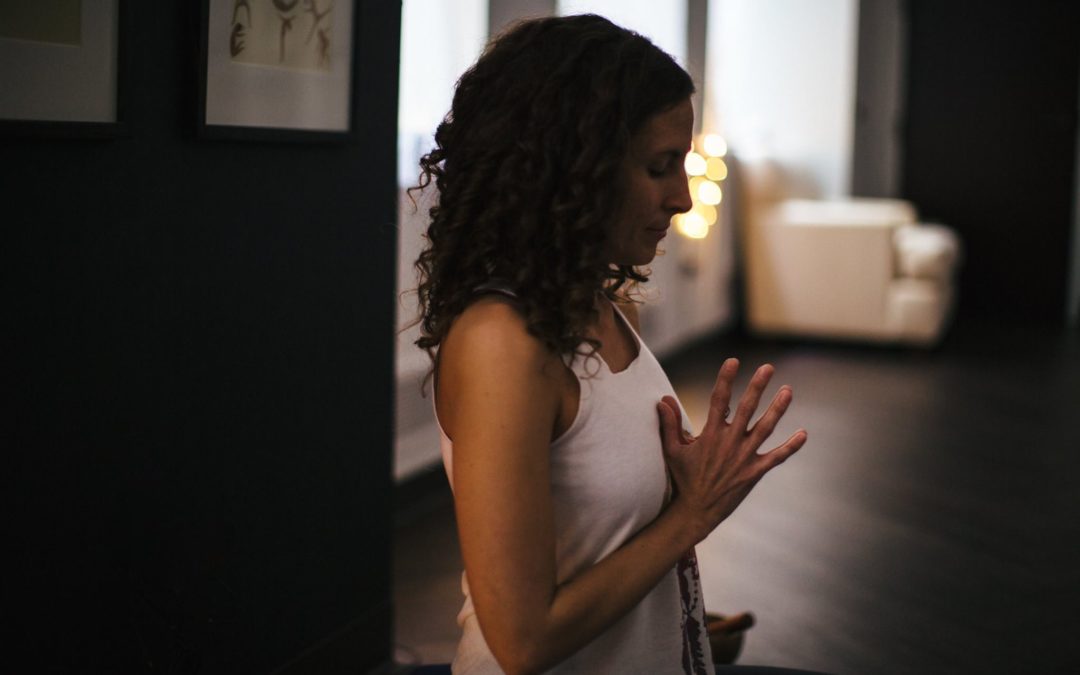
A Meditation to Practice Love and Acceptance

A Meditation to Practice Love and Acceptance

Photo courtesy of Madeline Northway Photography and Room to Breathe Chicago

Have you heard of “metta meditation”?

It’s an important word everyone ought to know.

I’ll get into why, but I’d like to take a moment to talk about judgment and criticism.  

If you’re like me, you can be highly critical of yourself… and others at times. Although I know none of us wants to admit the latter.

But even if I think I am accepting of others, of course there are people in my life that I judge. Or maybe they’re people I don’t know… politicians, for example.

Did that ignite a jolt of energy through your body?

The criticism and judgment we carry is human. But if left unchecked, we harm ourselves and the world around us.

Anxious feelings surface. Anger bubbles up. And then what?

We destroy… ourselves and connections around us.

Want to know how to transform that judgment into something positive?

Well, it takes moment-to-moment awareness to remember to be kind to myself. And when I do it genuinely, I can be kind to others.

One way to practice moment-to-moment awareness is through the practice of “metta“.

“Metta”, the Pali word for “lovingkindness”. Metta meditation comes from the Buddhist tradition. It integrates intention, feelings, and visualizations to elicit compassion.

Based in love, this practice has the power to develop compassion toward ourselves, as well as those “hard to deal with” people in our lives.

You can spend as little or as much time as feels right to practice. I recommend aiming for about 10 minutes to start.

The steps of Metta Meditation are as follows: 

1. Begin by sitting in a comfortable position. If you are sitting on the ground, you may sit on the edge of a folded blanket or cushion in order to elevate your hips so they are higher than the knees. This helps elongate the spine.

2. Take a moment to allow your body to rest and soften. Then take a few deep breaths in and out to let go of any worries.

3. Start to feel into the heart space at the center of the chest. Draw your breath into that area and allow it to soften resting in the natural flow of your breath.

4. We begin with ourselves, as it is difficult to feel compassion for others if we cannot first practice with ourselves. Repeat the following:

May I be at ease.
May I be healthy.
May I be safe.
May I be free.

Feel into the intentions that are expressed. You might imagine yourself just as you are with light and warmth around you. Or sometimes it’s useful to visualize yourself as a young child in need of nurturing. Spend some time cultivating love and compassion toward yourself.

Notice what sensations and feelings arise and continue to send kindness inward.

5. After directing lovingkindness to yourself, repeat the same process with the same intentions for a loved one for whom you care deeply.

May you be at ease.
May you be healthy.
May you be safe.
May you be free.

6. You can continue by bringing other loved ones or more distant friends, pets, or acquaintances into your awareness, generally moving from people who are closest to you and then continuing on to those that are less emotionally close. Eventually, you might even bring people into mind who you find challenging–family members, co-workers, politicians, etc.

Throughout this process, feelings of sadness, anger, anxiety, etc. may arise. Allow whatever feelings come up to be there and then draw yourself back to the essence of lovingkindness.

With greater lovingkindness, we repair the relationships of the world and unfold greater ease in our minds.

P.S. If you want to learn more techniques to cultivate self-love and live in Chicago, you might check out my Rewriting Your Self-Contracts workshop on June 17th. This has been one of my most popular workshops and it typically sells out fast.
The Way Travel Really Helps Me Cope With Loss

The Way Travel Really Helps Me Cope With Loss

I know traveling through grief sounds cliche. What a perfect way to escape pain, right?

Maybe you’re thinking this. Or you hear others suggest that traveling after a major life issues is an escape. But is it?

I’ve found my travel experiences to be profoundly helpful in coping with loss.

But it might not be in the way you think.

Let me explain…

I have traveled solo quite a bit over the last decade, sometimes for weeks and sometimes for years.

In the last nine years, I’ve experienced the loss of my mom, stepdad, stepmom, grandma, and grandpa. About a year ago, my grandma started experiencing symptoms of the early stages of Alzheimer’s.

My stepmom had been successfully battling cancer for six years. But in September 2016, just as I was leaving for Colombia, we received news that she has very little time to live.

Pain hit hard.

I felt guilty for leaving. All the thoughts ran through my head… “My family needs me. I can’t go”, “Why am I even bothering with these retreats?”, “How silly this trip feels…”, etc.

Then I thought, no, I need this. And yeah, that thought crosses the minds of many when we recognize a need for reflection and self-care. Those are all real and valid needs. I’m not dismissing them. But this is not about a cushy vacation in the sun with warm waves that melt away problems.

My travel journey has been about coping and learning to die while I’m alive.

Here me out…

It’s a need that started in my teens… a need for preparation.

You see, I’m an empath. When someone close to me is experiencing pain, I feel it. I’m not talking standard empathy. I tend to take it on and I have to work to come out of it. My mind goes to the suffering of the other, frequently much more than my own.

Sometimes the pain feels like it’s too much. Like I’m going to break. I don’t want to see my loved ones suffer. I’m tired of loss. Of cancer. Of addiction. Of death. I start thinking of losing the other people in my life. I think of dying alone with dementia with no children or grandchildren to be there for me.

And I freak the eff out. Anxiety kicks in and knocks me out. The future feels unbearable and I forget my own strength completely for a time.

This is where travel enters.

Travel is not an escape. It’s my resilience training.

That week in Colombia, I posted photos on social media of idyllic landscapes, vibrant villages, and even a few of me sporting a sincere smile. But my week entailed a lot more.

As an adventure traveler, I often choose the path laden with obstacles. For this trip that meant food poisoning, nauseating bus rides, getting caught in torrential downpours, an Airbnb host who wouldn’t give me a pillowcase, and relentless quests to catch a bus, obtain wifi, or find a house to host a retreat…a couple of times to find no one there to greet me.

At times these challenges were met with a steady mind, but others with tears and frustration.

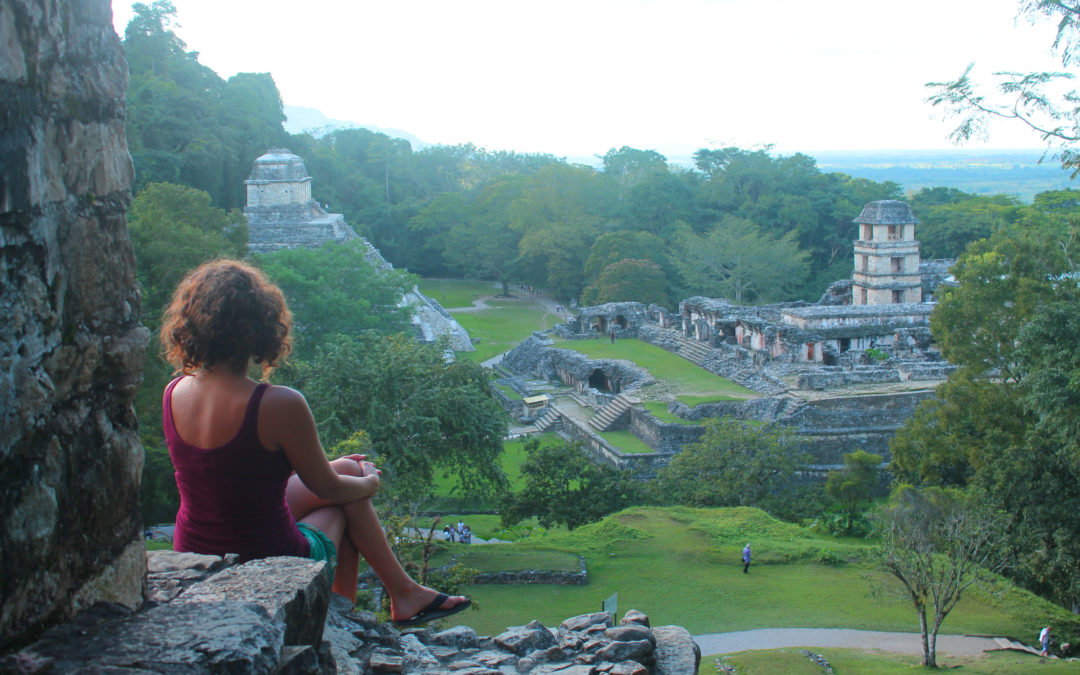
But then there were moments of great beauty and wonder as I greeted a small box fish under the sea during a dive or gazed up at the Dr. Seuss-esque towering wax palms of the Valle de Cocora. These moments of awe made me feel connected to those I’ve lost.

And then those moments pass and I need to reconnect.

I started the practice of Kriya Yoga at age 16 with my mom. I remember my then guru saying we should pray to live 100 years. I thought about what 100 years would look like. My friends and family would be gone. My youth and mobility would be gone.

It was then that I knew I would need to cultivate peace inside me in a way that keeps me in touch with impermanence.

I have made it my life’s path to stay in touch with the essence of death. Denying or escaping it only brings us greater anxiety later because it eventually smacks us in the face.

Instead I lean into the discomfort.

So, I choose the path that allows me to hold death in what one might call a liminal space of the mind, the intermediate place in between two states.

It’s a challenge to express into words. But what I can say is that sometimes when I am positioned within a room with four walls, pain hits me in a way that it is hard to move past. It’s too much. On the other side of coping, I could seemingly escape pain by taking up any number of addictions, attach myself to material possessions, or overachieve on everything.

Where I find balance is the space between… It’s the place where I can hold death and fear right in the forefront of my mind and allow it to sit there in a way that moves me toward living. I find I can do this best while doing things like hiking… in those moments when I am surrounded by obstacles or environments that place me outside of comfort.

The obstacles prepare me and grow me into a more resilient human being. And the vast perspective these experiences bring is what keeps me knocking on the door of life… all while recognizing someday the door won’t open.

I know it sounds morose, but I swear there’s freedom in this path.

An Essential Reason We Need Others for Self-Care

You know, in the last week I spent $435 on self-care in two seemingly disparate areas of my life.

As a yoga teacher, social worker, and someone who underwent a fair amount of therapy in her youth, I strive to cultivate self-awareness as part of my self-care practice. I also happen to have a partner who relishes self-analysis as much as I do… you can imagine what it is like to be a fly on the wall.

With this proclivity, it sometimes feels like we’ve got life covered. I can talk to my partner. I can do yoga. I can journal. I can cook. I can figure it out. Until… maybe I can’t…or even if I can…I need more.

So, I spent four days in a yoga workshop with senior teacher, Kim Wilcox. I wanted additional training on class sequencing to grow my anatomical knowledge, enhance my creativity, and make me a better teacher. I got all this from the training.

But what’s more is that I also found a new way of practicing that energized me and relieved my chronic back pain–for the whole day.

Kim was my mirror and she didn’t even know it. She reflected back to me some of what I was already feeling in my body, but she also provided me with a framework for moving toward greater health and energy to take care of myself.

The same phenomenon occurred last Wednesday when visited a therapist.

I have been struggling with certain personal relationships for a while and recently started to notice that I was sacrificing my own truth while letting others write the relationship contracts.

Shrinking my own voice has been a common theme in my life (I was doing this 17 years ago too).

I needed an extra boost to push me in the direction of truth. I needed another mirror.

And the truth is that sometimes we cling to unhealthy, but comfortable patterns when we have fear. Fear of change. Fear of discomfort. Fear of someone not loving us. Fear of having to face ourselves.

And even when the right answer is deep within our cells, sometimes it does not always feel clear…and of course, it is that much more difficult to implement it in our attempt to practice self-care. 

This is the time when we learn to listen to the voice inside that says she needs support to find clarity.

That support comes in countless ways and we must honor it when we need it.

I live in a country that prides itself on independence—and well, I think sometimes we internalize this concept and take it too far. We are ALL interdependent. I do believe our answers lie within us and at the same time I know the value of having teachers, mentors, therapists, and guides.

One of our greatest strengths as human beings is to be able to ask for help when we need it.

For me, asking for guidance moved me in the direction of creating healthier contracts with my own body and mind, as well as my relationships.

Having support in living my own truth is what allows me to take care of myself and hold space for others.

3 Key Components to Practicing Compassion During Injury

It can be difficult to practice compassion toward ourselves when faced with an injury.

We get frustrated with our bodies. We become self-critical when we don’t heal fast enough.

But to heal, we need kindness and compassion.

Today I want to share with you 3 key components of practicing compassion.

But first, a story.

I recently went backpacking and camping for a week in the southwest.

On day two, we were canyoneering through the Narrows in Zion National Park when I began to feel intense shooting pains in the joint capsule of my knee.

We were in the middle of a canyon applying agility with every precipitous stepping stone–and a good 10-hour hike away from being out of the canyon the next day.

Thoughts whirled in my mind.

How was I going to hike all this way?

Why is my body behaving like this for? I am a yoga practitioner and avid hiker. I don’t have knee problems.

Ow, it really hurts.

What if continuing this hike jacks up my knee permanently? I’m turning 34. How will I hike in my 60s?

I don’t want to complain. How would my stepdad have reacted? He never complained of the suffering he endured with Mesothelioma. Let me be like him. And what about my mom–her response to suffering? Oh god, this is just a knee…

Ouch.

Trauma sprung. Tears came pouring. There’s a lot I could say here, but…

I made it out of the Narrows. My knee returned to its strength and I returned to my mat.

When I got back to Chicago, a clumsy collision with a door frame at home landed me with a broken phalange. Bam. Crack. Uff.

I hobbled for 8 days with a poor tape job on my baby toe before seeing a podiatrist (apparently, taping the fifth toe to the fourth is a no-no).

I also hobbled along with a poor excuse to not do my yoga practice, but continued to walk, move things, teach yoga, and even audition at a studio–all while in a great deal of pain.

One of my yoga teachers advised me to do standing poses. Inside I balked, but realized maybe he was right. It is just my baby toe after all. Maybe continuing through the pain would help the healing process. Stop creating excuses, mind.

Then I asked the podiatrist if I could do yoga, he replied with an emphatic, “Nooooooo. Stay off it. It needs to rest.” And the mind said…”Yep, best to stay off of it. Excuse okay here.”

As competing thoughts patterns inhabited my mind, I acknowledged that what lies between is a middle path…a middle path that honors ahimsa, the Sanskrit word for “compassion” or “nonviolence”.

Ahimsa is rooted in the notion that violence can take place in our thoughts, words, and actions and when we have ill thoughts, they lead to derisive words and harmful actions. These, in turn, create destructive habits and ignorant conditioning. When we do harm to ourselves, we harm others and vice versa.

I constantly remind myself that yoga is not just asana (physical poses). The yoga practice takes place off the mat in how we lives our lives, interact with others, treat ourselves, etc. But to only practice off the mat can impede our ability to practice tapas (self-discipline). And providing space for tapas serves as our point of reference to continuously do the work of yoga.

I would be a fraud if I suggested I am over this battle in my head. It is never over. It’s always there.

It is a constant practice of listening to the body and choosing compassion. Nonviolence is not passive; it is active, intentional thought, word, or action or absence thereof. It is a balance of allowing rest and still forcing myself to move past excuse and onto my mat in a way I know is good for me right now. I have adapted my Mysore practice accordingly. See below for more info.

3 Ways to Practice Compassion During Injury:

1. Track your thoughts:

In yoga, we practice observing our thoughts when faced with discomfort and challenging emotions. Still, we tend to disavow both our strengths and weaknesses, breakthroughs and shortcomings. This is a balance of examining where you can push and where you can pull back, where you need perseverance and where you need gentleness. Where are you being too harsh? Where are you making excuses? They both warrant a turn to ahimsa.

I have been taking 10 minutes each morning to meditate and 30 minutes to journal. It is a practice of stillness while simply observing thoughts and then allowing time to reflect on paper. Even if you can only devote 10 minutes to sit in stillness and observe what comes up, this will have a profound impact on your life.

2. Watch your words.

Words often follow thoughts. And they have power. I have found myself uttering the words “my stupid broken toe” or “my friggin’ knee”. Each time, I have immediately recanted my words as I realized these words were unkind and not useful for my body. I love my toe. I love my knee. I love my body.

Words also make actions more real. I recently told my boyfriend, that I was making a commitment to self-care and compassion for myself–a commitment to myself and the women I will be holding retreat space for in January. I wake up at the same time every morning to meditate for 10 minutes, journal for 30, and then practice yoga for an hour in a way that honors where my body is that day–the same practice I will be asking of the women. Stating that commitment aloud has made it easier to stay on track with my own self-compassion.

If you are working through a particular issue and find the same negative thoughts, words and speech arising, take a moment to journal the new thoughts and words you would like to generate in place of the negative ones. Use those affirmations in your thoughts and verbal processes.

3. Attend to your actions.

You only get one body. If you are experiencing an injury or pain of any sort, let this be a time to make friends with your body. We are hypercritical of our thighs, skin, achy joints, and lack of flexibility. Make a conscious choice to fall in love with yourself–every aspect of you.

The only way you will hear how to best nourish your body is if you take time to really hear it. I went to a talk last night by a wonderful teacher and storyteller, James Boag. He reminded us that wild animals are always fit. They know exactly how to eat, when to eat, and how to move as part of their inherent instincts. I would go further and suggest they also know what their abilities and limitations are in times of injury. And they bounce back. They recover quickly.

Through these last two minor injuries (and they are minor!) I have experienced some fear and uncertainty. But it is only fear. When I really listen, my body tells me what it needs. It is unnecessary to follow all of the other voices around me. And it always needs movement and yoga–in a way that respects the principle of ahimsa.

How I adapt my Mysore practice:

You may have seen this video circulating on Facebook at some point. It shows a great way to modify the entire Ashtanga Primary Series without standing poses.

If this guy with a broken femur could continue his practice–anyone can practice. My little toe certainly is not going to stop me. The practice certainly feels different, but I find it still creates heat and offers most of the same benefits.

Have you had an injury that has affected your practice? How do you practice compassion?

Cozy Up and Nourish With African Groundnut Stew

Cozy Up and Nourish With African Groundnut Stew

Looking for a new comfort recipe to nourish this season?

I invite you to try this African Groundnut Stew inspired by West African flavors and recipe variations. It’s a simple, hearty dish that your whole family will love it…provided there are no peanut allergies.

Yes, the term groundnut is often used to refer to the peanut, which is said to have originated in South America and was later brought to Africa by colonists. Yet, the groundnut in traditional African Groundnut Stew is a different legume indigenous to Africa called the Bambara Groundnut.

We’ll be using peanut butter (and peanuts as an optional addition) for this recipe.

I’d like to first elaborate on the importance of grounding foods at this time of year.

If you’re living in a four-season climate in the northern hemisphere, chances are temperatures are dropping. The crisp air and blustery winds are your cue that it’s time to turn inward and cozy up with warm foods.

In sharing this recipe, I’ve reflected on the principles of Ayurveda, yoga’s “sister science” that is considered to be one of the oldest healing systems and seeks to balance various energies and facets of one’s biological and energetic constitution.

While I’m not an Ayurvedic practitioner, I do believe much of the wisdom of syncing with nature and seasonal cycles that I’ve learn from my teachers can be beneficial and support a state of balance and harmony.

Since this is a cold, dry, rough, windy, and unstable time of year associated with the Ayurvedic principle of “vata”, foods that are warm, cooked, moist, hearty, and grounding are said to be most supportive in encouraging physical, mental, and emotional balance.

This recipe incorporates Ayurvedic food guidelines by using seasonal root vegetables and greens, oils, nuts, mild spices, and grains that are favorable to the vata constitution.

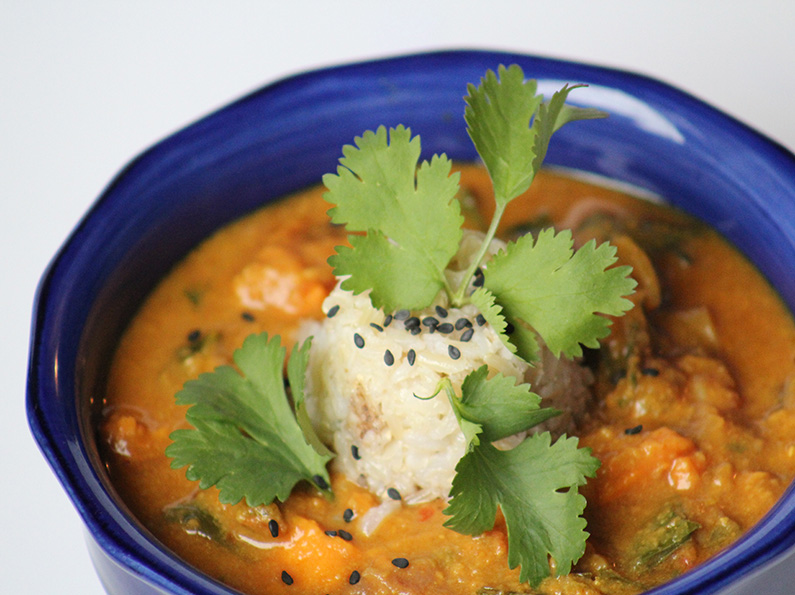
African Groundnut Stew

Prep time: 10-15 minutes
Cook Time: 50 minutes
Serves: 4-5

Ingredients:

  • 2 c. rice or quinoa (for serving)
  • 16 oz. can crushed tomatoes
  • 5 c. veggie or chicken broth
  • 5 c. sweet potatoes, cubed
  • 1 large bunch collard greens, coarsely chopped
  • 1 medium onion, finely chopped
  • 1 c. peanut butter, crunchy preferred
  • 3 T. olive oil or ghee (clarified butter)
  • 2 T. ginger/garlic, minced
  • 1 T. chili paste
  • 1 T. turmeric
  • 1 T. cumin
  • 1 tsp salt
  • Salt and pepper to taste
  • Cilantro and peanuts to garnish (optional)

Directions:

  1. In a large pot, saute ginger, garlic, and onion in olive oil on medium-high heat until onions are translucent and slightly browned.
  2. Add broth, sweet potatoes, cumin, chili paste, turmeric, and salt. Bring to a boil; then reduce to low heat and simmer for 20 minutes.
  3. Stir in peanut butter and crushed tomatoes. Simmer for an additional 20 minutes.
  4. Mix in collard greens. Allow to sit for 5 minutes.
  5. Serve with rice, quinoa, or grain of choice.
  6. Garnish with cilantro and/or crushed peanuts.

Savor slowly and share!

Feeling Down? A Simple Trick to Ignite Your Strength

We all experience glum moods and irritation.

Sometimes it comes from an external circumstance. And sometimes it arises for what feels like no reason at all.

Today I will share with you a super simple way to spruce up your energy anywhere and anytime.

The other day I was sitting at the airport with a delayed flight…of four hours.

I had just finished an energizing few days visiting a friend.

But I was also been yearning to be in the presence of my partner…more than ever. Like, I really missed him.

Those four extra hours feel like an eternity.

The lovely Spirit Airlines (yes, we have a codependent sort of relationship—you keep behaving in a destructive way and I will pretend all is well) was about to grace the ornery passengers with amazingly generous food vouchers of a whopping $7.00.

While I was standing in line, I found myself slouching and slumping into negativity.

I quickly activated my “Tadasana” feet, legs, and spine. What a difference.

If you are unfamiliar with Tadasana, it is Mountain Pose. If you did not know any better, you’d think it is just standing.

But Mountain Pose is a very active pose energizing every body part from the inner arches of the feet to the skin on the back of the head.

I realized in that moment, that Tadasana is a pose that truly activates the mind into an alert and conscious state.

It is the pose that helps us to stand taller like a mountain, but also be taller and higher in our minds—just as we are when we are at the foothills of a mountain.

It reminds us not to get bogged down in the small hiccups of life and that all is in perfect harmony if we are in the mind.

Tadasana/Mountain Pose

1. Stand with your feet parallel at hip distance.

2. Distribute your weight evenly through all four corners of the feet—inner heel, outer heel, ball of the foot, and outer ball of the foot.

3. Lift up through the inner arches of your feet.

4. Tuck your tailbone slightly so that it points down toward the ground as you lift up through the pit of the abdomen.

5. Raise your heart and drop the low ribs gently.

6. Lift the back of the skull.

7. Breathe. Notice.

8. Be kind to yourself and others.

9. Trust that all is in perfect order.

How do you use Tadasana? Share your thoughts below!