
Pride Reflections: Hope, Queer Identity & the Values That Shape My Work

Pride Reflections: Hope, Queer Identity & the Values That Shape My Work

As Pride Month draws to a close, I want to speak to the hope still ahead—despite the heartbreak, remind you of the values that shape my work, and share how I’ve come to recognize my own queer identity over time.

It’s easy to feel disheartened (and scared) when the LGBTQ+ community is being relentlessly targeted by both policy and culture. Book bans, anti-trans legislation, attacks on bodily autonomy, and threats to same-sex marriage are sweeping across the U.S. and beyond.

And still, there’s so much people power building through intersectional movements across the globe. So, let’s begin with some reasons to celebrate:

Nearly 800,000 people showed up to Chicago’s Pride Parade this past weekend.

In Hungary, where authoritarian leader Viktor Orbán called for a ban on Pride and threatened fines and imprisonment, Budapest’s Pride March saw a record turnout with an estimated 100,000–200,000 people showing up. That’s up from 35,000 last year.

Given that the current U.S. government is following Orbán’s playbook closely, this resistance and visibility can give us strength and hope.

Onto something more personal… my own queer identity

Last year, I shared briefly about reflecting on my queerness. I want to share a little more—though I’m still asking a lot of questions.

While my relationships have been with cisgender men, my orientation extends beyond the heteronormative script and includes people of all genders.

I’ve hesitated to call myself queer. I don’t want to take space that isn’t mine or dilute what it means to be queer. I’m cisgender, my partner is a cis man, and I don’t face the marginalization many queer and trans people do. I can move through the world without fear of being targeted for who I love or how I express my gender.

Yet, omitting this part of myself feels like a quiet erasure of the many ways queerness shows up.

Through conversations with my partner, queer friends, and my own reflection, I’ve decided that visibility matters more than my hesitations. We need more honest expressions of ourselves—not fewer. Queer identity is an umbrella with a wide, varied landscape, as expansive as nature itself.

Part of me remains unsure if “queer” is mine to claim. But I know I don’t fit neatly into a heteronormative mold. Even as I continue to understand this part of myself, I believe that naming matters if it can help others feel safer in the spaces I hold.

Still, I recognize that my risk level of being “out” is very different than most in the queer community.

Because access to basic rights and safety remains unevenly distributed.

For many LGBTQ+ people, the path to belonging begins in exile—from families, spiritual communities, and institutions never built with queer people in mind.

We are in an era of rising violence, system harm, and exclusion targeting trans and non-binary people, people of color, and those at the intersections of multiple marginalized identities.

These aren’t distant issues. They show up in our communities, and sometimes, in my work.

Recently, two people did not register for a retreat because it was open to gender-diverse people. One of them said she could be “respectful,” but that she could not affirm what she called “trans ideology.” 

After some discussion, I told that her my retreats wouldn’t be a good fit. Protecting safety and upholding social justice come first, even when it costs me clients.

I know that for some, the idea of gender beyond the binary can feel unfamiliar or confusing. I have a lot of patience for those who are genuinely open to learning. This isn’t about having all the answers. I’ve stumbled plenty along the way myself.

But I want to say this clearly:

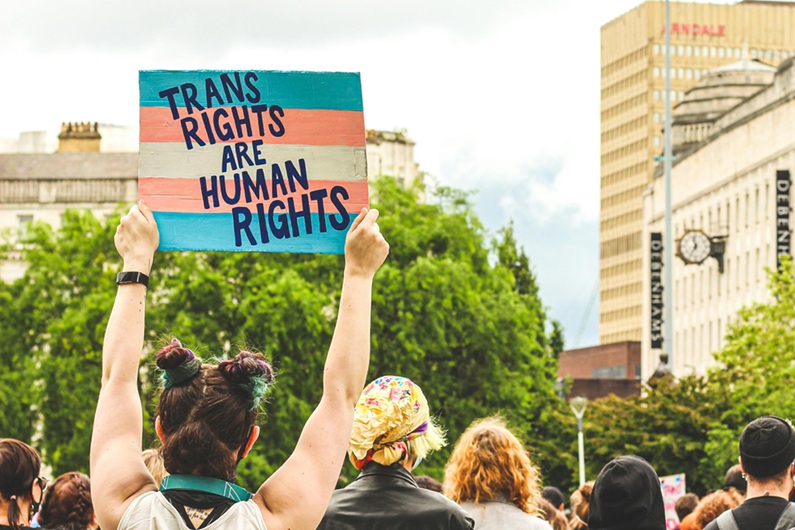
The existence of trans people is NOT an ideology.

Gender is one’s internal sense of self, which, like so much in biology, doesn’t fit into neat categories. Trans people have always existed across cultures and time and they always will.

My retreats are built on a foundation of inclusion for those with marginalized identities. Thus, I will always prioritize the safety, dignity, and belonging of queer folks, including trans, nonbinary, and gender-diverse people in our gatherings. I hope you will too.

I bring together those whose nervous systems don’t match dominant cultural expectations to create brave, affirming spaces where we celebrate diversity.

Just as queer ecology teaches us that biodiversity strengthens an ecosystem, the existence of queer identities strengthens our communities. Our differences—like those in nature—are essential expressions of life’s beauty and resilience.

When we create spaces where everyone’s wholeness is welcomed, we begin to repair the systems of separation that have fractured us.

And eventually, the tide will turn.

The arc of change is somewhat predictable: visibility grows, resistance swells, and eventually, acceptance prevails. History has shown us this pattern time and again.

Some day, being trans or nonbinary will no longer be seen as controversial or political—but simply as part of the natural, beautiful diversity of being human.

Until then, we can bring “some day” closer.

Through the spaces we create.
Through the language we use.
Through the way we listen and affirm.
Through the human rights we fight to protect.

I’m in the process of adding a values page to my website. If you have questions about joining a Retreat or HSP Circle, reach out to info@melissanoelrenzi.com. I’m happy to have a chat!

Crafting Ethical Retreats: Navigating Venue Selection with Care

Crafting Ethical Retreats: Navigating Venue Selection with Care

When organizing retreats, my selection process for venues involves extensive criteria.

Some relate to logistics, including location, cost, and layout. I prioritize venues with privacy, reasonable pricing, and single occupancy rooms.

Other criteria encompass my environmental and social values.

Environmental Ethos: Upholding Sustainability in Retreat Planning

Respect and protection for the natural world underpin nearly every decision I make, both personally and professionally.

I seek out climate-conscious collaborators who are implementing sustainability practices that reduce their/our ecological footprint and help regenerate local ecosystems.

I prioritize grounded, ethical retreats over luxury getaways. My goal is to promote responsible engagement with the world. I aim to minimize negative impacts while actively contributing to healthier ways of living with our surroundings.

Many individual and collective challenges, in my view, stem from our disconnection from the natural world and a misguided sense of human superiority that permits endless extraction. Our gatherings provide a space to repair this relationship and rediscover ourselves as part of nature.

Trauma Awareness and Cultural Sensitivity

A core purpose behind our retreats is to nurture belonging for HSPs and introverts, as we embrace our traits and uplift our strengths in support of ourselves and others.

While we may share traits of sensitivity or introversion, it’s important to recognize the diverse abilities, identities, perspectives, and experiences within our groups.

Bringing people together in ways that prioritize belonging, accessibility, equity, and collective well-being is crucial to me.

As I approach my work through a trauma-informed lens and a commitment to social and environmental justice, and have been involved in the wellness world for 25 years, I’ve encountered a range of issues when choosing venues and partners:

  • Experiences of people from marginalized groups often feel further marginalized in wellness settings, and may even fear for their safety in some regions
  • Widespread abuse by teachers, cult-like dynamics, and spiritual bypass in the yoga and wellness world, as well as other religious institutions
  • Cultural appropriation, which has gray areas, but relates to taking or capitalizing on elements of a culture that is not yours without proper understanding or permission from the source culture
  • Misleading claims about treatments and modalities in the alternative healing industry that I’ve seen do real harm
  • Branding that evokes exclusion or able-bodiedness
  • Overtly faith-based in a way that can feel exclusive to those from other faiths or no faith
  • Greenwashing tactics or overly hyping insignificant efforts at real sustainability

The list could go on and I could write about each of these for days. I’ve had a lot of discussions with venues to bring awareness to these issues.

Some of you might be nodding your heads. Others may feel like my criteria and aversions come off as judgey or like my expectations are too high.

I get it, and that’s partially where I’m headed with this article.

Releasing Rigidity: Ethical Retreats Doesn’t Mean Perfection

I’ve turned down quite a few venues for any combination of the issues mentioned.

I firmly believe these considerations are important. My interactions with participants throughout eight years of facilitating retreats have underscored this. However, there’s a delicate balance to strike.

It’s easy to become consumed by the pursuit of an elusive ideal.

It’s good to have ethical standards, but expecting any individual, business, or organization to meet every criterion is not only impractical but frequently unfair and counterproductive.

The quest for perfection is a form of mental colonization, where unattainable standards become ingrained. It stifles honest expression, creates fear of failure, and limits possibilities for growth.

Not only do rigid expectations mirror systemic patterns of oppression; rigidity can overlook other unique strengths that people and places have to offer, and can shut down opportunities to do better together.

In my journey toward creating more ethical retreats, I’m certainly aware of the areas where I have room to improve (physically accessible locations and affordability come to mind). Others are also on journeys. I believe it’s important to extend grace to each other as we continue to progress.

This blog was inspired by the mental acrobatics I went through before agreeing to partner with a particular venue.

Embracing Dialogue and Growth Opportunities

I stumbled upon Elohee, a family-run, non-profit retreat center in northeastern Georgia. The center is highly praised, the staff super communicative, and they have a thoughtful setup.

When I visited, I learned more about their dedication toward preserving the land. I witnessed the love and attention to detail they put into creating a special guest experience.

I listened to the owners’ healing journey. I also learned that their initial vision didn’t involve a retreat center, but they soon felt compelled to share the land with others.

However, one of the venue’s accommodations, known as Thanksgiving House, caused me to hesitate, given the legacy of violence and trauma associated with this “holiday”. I later found out that it got its name because the former owners spent Thanksgivings there, and were invited to return for several years after the current owners bought the land.

I further hesitated when I realized that Elohee comes from the Cherokee word elohi meaning “earth” (by other accounts: harmony, wholeness, abundance, or peace). Despite their intentions to honor the Cherokee, this usage of the word without any involvement from the Cherokee community can be a form of cultural appropriation.

Recognizing that this is the ancestral homeland from which the Cherokee, Yuchi, and Miccosukee, were forcibly removed, I grappled with these issues. I thought about the native participants that have come on retreats and how they might feel.

Do I dismiss venues that fall short in areas that matter to me or might hurt others? Or, do I embrace the potential for growth in dialogue and collaboration?

Rather than dismiss the place, I opened up a conversation with the retreat director, and later, the executive director. Both times, I was met with receptivity to my concerns and learned that they are raising these issues with the Board of Directors.

While I still did plenty of toiling after those conversations, eventually I decided to go forward with a fall Georgia retreat. My choice to go forward with the retreat was in part due to their willingness to listen, learn, and contemplate change.

But it was also grounded in my belief that genuine change and evolution emerge through dialogue rather than outright dismissal.

I’m not sure what they’ll decide or do. I know that organizations can’t change their name and entire brand overnight. As a business owner, I recognize the arduousness of the process.

Just as importantly, I know that decolonization, change, and healing are not instantaneous. They require time, depth, ongoing discussion, and a collective acknowledgment of past missteps.

Focusing on Strengths in Venue Selection

Truly, no venue I work with can check every box, even though they’re all doing amazing work. Here are a few examples of the ethical retreat venues I work with:

Portugal: Monte Velho is doing great things with sustainability and reforestation efforts. They have spacious single rooms with private baths. The food is outstanding and they have a solid team. But their prices keep increasing, and limited transport in the region means I pay other high costs, making this trip less financially feasible for some.

Guatemala: Lomas de Tzununá not only offers incredible volcano views, they’re also committed to their community and environmental protection. Prior to building, they engaged community members in a participatory process to share their intentions and ask how the hotel could support the local community. They built (and still support) a community center in town, which aligned with the needs the community expressed. Our values align on many levels. The downside is that it’s built on the side of a cliff with many stairs, which drastically limits its physical accessibility.

Mexico: La Duna Centro Ecológico is owned and run by my mentor and co-facilitator Gabriela Flores. It’s great to work with someone who is from the country we’re visiting (sadly, it’s rare) and who is so heavily involved with local scientists and activists in protecting the surrounding dune ecosystem. La Duna is very off-grid, nearly carbon neutral, and a true oasis where desert meets sea. The challenge is that it’s more rustic and not everyone is willing to nudge their comfort zone. Yet, its simplicity and remoteness may also be part of what allows people to sink so deeply into their connection with nature.

Final Reflections…

Every venue can present its unique mix of challenges and opportunities, requiring a balance of ethical standards and practical considerations. The examples provided underscore that no venue or partnership can meet every criterion, nor should they be expected to do so.

Instead of seeking flawlessness, I’ve come to value focusing on the strengths of my partners and the impactful work that they are doing.

Reflecting on my own experiences, I recognize that dwelling too much on what I’m not doing can keep me stuck. When I remember the impact my work does have, I experience more feelings of possibility, creativity, and motivation in ways that match the values I’ve outlined.

There will inevitably be moments for honest dialogue and suggestions. Yet, what matters is that we’re on a journey of learning, adapting, and taking the actions we can toward equity and collective well-being.