
A Guide to Balancing Social Action and Self-Care During the Holidays

A Guide to Balancing Social Action and Self-Care During the Holidays

Some love the holidays. Others struggle with grief, loneliness, broken family ties, or various pressures. Most of us experience a combination of both joy and sorrow.

This year, these personal challenges may be compounded by the grief that Palestinians, Israelis, and Jews are experiencing and the senseless division accompanying human suffering. Many of us can’t look away from the humanitarian crisis in Gaza.

When faced with this suffering, and other injustices weighing on our hearts, HSPs may have a tendency to disengage. Others may get so emotionally involved that it can feel almost wrong to experience joy or peace during the holidays, which, unfortunately, really do feel like luxuries these days.

For most of my life, I’ve navigated the balance of staying engaged in justice issues while preserving my well-being. I’ve struggled to participate in “normal” activities with my family and friends who may not be thinking or feeling as much as me.

So, how do we, as individuals navigating our own lives, strike a balance between engaging in supportive action while caring for our relationships and ourselves?

7 Practical Tips for Balancing Social Action and Self-Care

1) Acknowledge the universality of heightened emotions.

While you might be experiencing a whirlwind of emotions, it’s crucial to acknowledge that others around you may also be grappling with their own unique set of stresses, personal losses, and geopolitical fears.

Understanding that everyone carries their own burdens fosters a sense of shared humanity and collective empathy, even for those whose perspectives sharply differ from our own. By remembering that emotions are high, we can better navigate conversations with compassion and choose our actions wisely.

2) Don’t look away, but be mindful of what you consume.

The news can feel overwhelming to HSPs who tend toward absorbing the emotions and suffering of others. Yet, disengaging from the news is a privilege I’m not comfortable ignoring. I believe we bear a responsibility to stay informed for the sake of our communities and our ability to take effective action.

This doesn’t mean endless scrolling, or engaging with sensational headlines and talking heads. It’s important to choose when, where, and how you take in information.

Mindful engagement with the news may mean becoming aware of your reactions, setting time limits, and directing your attention toward long-form articles or academic panels. Content that involves deeper analysis and dialogue may also be less activating to your nervous system. Find a balance within your window of tolerance to avoid overwhelming your capacity to cope.

3) Nurture yourself in ways that permeate and endure.

Self-care extends beyond massages and Netflix. While these activities may be relaxing, they tend to serve as temporary distractions from the underlying causes that contribute to our stress in the first place, rather than actual self-care.

We do need ways to “turn off” sometimes, especially for HSPs with active minds who tend to overthink. We just can’t conflate these activities with self-care.

Genuine self-care involves creating space to feel and process our emotions. It’s tending to our needs, boundaries, and relationships. It’s taking an honest look at our capacity to discern where we can push ourselves and where to pull back. It’s getting intimate with our values and making choices that align them. It’s knowing our worth is inherent rather than tied to distractions we think will make us happy.

4) Take actions that align with you from a regulated state.

The intense emotions stirred by humanitarian crises and injustices can lead us into a sea of our own emotions, as well as relentless pressures and urgent calls from social media influencers.

It’s true that there are dire crises, like the one in Gaza, that require immediate attention. It’s also true that we can fall quickly into group think with polarizing algorithms that curate whatever forms of media we’re consuming. We really don’t all have to engage the same way or believe the exact same things. We need diverse forms of participation.

When it comes to balancing social action and self-care, it’s not only okay—it’s wise to have a little distance to calm your nervous system, learn, and gain clarity about ways you can contribute that align for you. It’s more sustainable for you and the movement in the long run.

5) Discern the moment for conversations that involve differing views.

Holiday gatherings often involve diverse perspectives. While we need to have honest dialogues across differences, you don’t have to engage in every discussion that presents itself. The “when” and “how” matter when it comes to having contentious conversations.

Recognize the power of speaking up and the power of stepping back. This doesn’t mean remaining silent in response to bigotry or playing nice to keep the peace. It means that you’re grounded enough to assess the setting and dynamics you’re in to discern how to respond if it’s the right time.

Polarized group dynamics are very unlikely to create the conditions for genuine curiosity and deep listening. One-to-one conversations are far more likely to be constructive.

6) Connect with supportive people.

It’s important to connect with like-minded communities who share in your care and purpose and with loved ones with whom we may not share the same views or focus.

Communities focused on shared issues can reduce isolation, provide belonging and solidarity, and offer space for processing a range of emotions, from grief to joy. We can cultivate resilience and better channel our empathy into meaningful actions.

At the same time, we also need supportive friends and family who differ in their perspectives and with whom we can connect in a variety of ways. Engaging in social action can take a toll. Having diverse relationships can offer balance and allow for a necessary break from intense work and emotions.

7) Carve out unstructured time to play.

Play is acting or exploring for the sake of enjoyment without a particular outcome and it has many benefits. Play not only allows for relaxation and creativity to flourish, but it also plays a pivotal role in preventing burnout. Carefree play triggers a release of endorphins, which can elevate your mood and provide a cognitive reset.

We’ve been conditioned out of play as adults, so we may need to intentionally set aside unstructured time to foster playfulness. Here are a few examples of unstructured play you can try:

  • Nature walk (no ear buds, following your body/senses rather than a path)
  • Dancing (free form, without concern for rhythm or moves)
  • Painting or drawing (contour – just moving w/o lifting the brush/pen)
  • Sitting on the ground and playing with or arranging nature items

As we aim to balance social action and self-care…

Let’s be mindful of how we engage, tap into the strength of our empathy, and allow for the full spectrum of emotions that accompany this time. Let’s also remember that engaging in social justice is not a solitary task and there are many diverse ways to contribute.
A Call for Humanity: Help Palestinians in Gaza

A Call for Humanity: Help Palestinians in Gaza

Edited on October 31, 2023

I’ve been trying to find the right words to share.

I want to be sensitive to my Palestinian, Israeli, Muslim, and Jewish readers. I want those of you who are suffering to know that I see you.

My heart is heavy with the suffering that has been inflicted on innocent civilians in Israeli and Palestinian communities.

I still can’t grasp the horrors committed by Hamas against innocent Israeli civilians simply living their lives. I also can’t grasp the bombing of Palestinian civilians that has followed.

I feel for the Israelis and Palestinians who have been traumatized for generations and continue to be traumatized by unimaginable violence and hate.

I also believe I have more responsibility than to extend condolences, prayers, or express that I’m for the safety, dignity, justice, and freedom for all humans. (If you know me, the latter is a given.)

I have a responsibility to speak in opposition to antisemitism and anti-Muslim rhetoric.

I have a responsibility to speak in opposition to the collective punishment, human rights abuses, and war crimes being imposed upon innocent Palestinians…

Especially when right now mainstream discourse supports indiscriminate violent retaliation at the expense of innocent lives and an entire civilization.

To be clear, there is no circumstance in which kidnappings and murder of innocent civilians as Hamas terrorists have carried out is justified. It’s always wrong and I can’t imagine what Israeli and Jewish communities are experiencing, as many continue to await the safe return of loved ones.

I absolutely advocate for the safe return of the hostages that are being held by Hamas forces. I hold the victims and families affected by these attacks in my heart.

But Hamas does not represent anything close to all Palestinians (or Muslims) any more than the Israel Defense Forces represents all Israelis (or Jews).

Hamas sure as hell doesn’t represent the thousands of Palestinian children in Gaza that the Israeli military has bombed since October 7th (and over decades of forced occupation).

I recognize that Israel is in what feels like an impossible position with terror at their door step. I recognize the nation’s right to defend and protect itself.

In this process, the lives of innocent Palestinians must be protected too. No group of people should be denied access to the basic human needs of food, water, and electricity.

Thankfully, pressure by the international community is beginning to move aid into Gaza, but it’s still not enough.

My call for us to keep our humanity somehow means I’ll lose readers. Yet, it also feels like no matter what I say, it will be opposed or seen as not enough.

I kind of understand, as I wrestle with the complexity myself.

Even after I write this email, I’ll have an inner critic that calls me out for things I should or shouldn’t have said, things I could have said better, not being firm enough, not being nuanced enough.

Those voices keep me intellectually honest, so I welcome them.

Truly, there is too much complexity involved in the history of Israel and Palestine and the current situation than an article, or even language in general, can capture in any kind of complete way.

But despite complexity, I’m for doing whatever is within our power to stop senseless hate, violence, and at worst, genocide.

Caring about human life means speaking up for all human lives.

It means that when we say “never again” we include and value Brown and Black lives as much as white ones. (We’ve willfully ignored recent and current genocides just because they were in the global south and don’t get the media attention.)

It means checking our biases to ensure we aren’t inadvertently supporting antisemitic, Islamophobic, or dehumanizing rhetoric, which have real hate crime consequences.

It means taking the actions that support safety, well-being, and freedom for all of our children.

What You Can Do to Help Palestinians in Gaza

1) Take a step back and allow some space with what you’re consuming. While we need voices for innocent civilians now, we need to balance this urgency with checking in with our nervous systems and biases, getting educated, and questioning narratives that may not have supporting evidence. The Wiser World Podcast has an unbiased and comprehensive 3-part series covering the Palestinian-Israeli Conflict (which was actually recorded prior to October 7th).

2) If you reside in a country (like the U.S) that is supporting war crimes in Gaza, you can contact your elected officials to demand a ceasefire and continue calls, not just to fund humanitarian aid, but ensure it reaches civilians.

  • Jewish Voice for Peace has a sample script and a form that U.S. constituents can use to contact your representatives and President Biden.
  • Join a phone bank with If Not Now.

3) Donate to organizations that have a longstanding history of providing aid. Two organizations I’ve donated to are:

4) Write a letter to the editor of news outlets you follow and ask them to call for a ceasefire.

5) Finally, I think we need to remember that while we continue to speak up and take action against escalating violence and suffering in Gaza, we can also get involved with supporting displaced people and refugees in our own communities.

Please highly sensitive friend, let’s protect our humanity together and take action toward peace however we can.

Upset by the Overturning of Roe? What You Can Do

Upset by the Overturning of Roe? What You Can Do

With the recent U.S. Supreme Court decision overturning Roe v. Wade, many of us are feeling flooded with emotions, from anger to sorrow to despair.

If you’re feeling the devastation over this very personal choice and right to terminate a pregnancy being controlled by the government, I feel it too.

The emotional journey over these last few days has been layered. I actually felt physically ill over the weekend and struggled to find words to share with you.

While there are many unknowns with how this ruling will play out in each state, we know that the people who will be most affected will be those with the greatest vulnerability and fewest resources.

It seems our work ahead must include the following actions:

  • Donate to support local abortion funds and reproductive justice organizations.
  • Advocate at the state level to protect abortion, particularly in moderate states.
  • Engage in systems of mutual aid to build solidarity and support each other.
Your involvement may take one form now and another later, but it can feel overwhelming when you’re not sure where to begin.
 
I thought I’d offer a roadmap to get started.
 
There are many ways to engage in this work. This is not intended to be a comprehensive roadmap, but a simple, manageable way to move forward from feeling stuck.
 
1) Give yourself a moment to feel and get grounded.
 
Feeling emotional is a normal response to reproductive rights being eroded. Your nervous system may be in overdrive and you might be scrambling for how to take action right now.
 
It’s true that there is urgency around reproductive justice and other rights that seem to be on the line. Yet, we need to go beyond this moment, dive deeper, and find sustainable ways to stay involved for the long haul.
 
I invite you to take a breath and let out a few long exhales. Then, remember that while each of us must do something, no single person can do everything.
 

Allow yourself to hold space to feel—whether that be alone or in community. Processing with other people can help provide the ground and support to help you determine what actions you can take.

2) Take one small action now.

This is the moment to donate to abortion funds, if you have the financial resources. If you don’t have the means right now, consider sharing information with those that do.

The National Network of Abortion Funds has a list of local abortion funds where you can offer and seek help. It can be exhausting to research organizations, so I’ll also share that Yellowhammer Fund is an abortion fund I’m contributing to monthly. My activist friend, Omkari Williams, has friends involved in this work who know the founders personally.

This is also a time to learn more about what is happening in your own state and how you can get involved in local advocacy groups to protect abortion.

But in the months to come, we’ll need to take an honest look at what we have to offer and expand our actions beyond donations and hopes for policy change.

3) Take inventory of how you can engage in mutual aid.

If you’re unfamiliar with mutual aid systems, according to Dean Spade, trans activist, law professor, and author of Mutual Aid: Building Solidarity During This Crisis (and the Next):

“Mutual aid describes the work we do in social movements to directly support each other’s survival needs, based on a shared understanding that the crises we are facing are caused by the systems that we’re living under, and are worsened by those systems. Mutual aid focuses on helping people get what they need right now, as we work to get to the root causes of these problems.”

You can read about the difference between mutual aid and charity in this article from The Nation.

I spoke with a retreat guest who mentioned that her friend in California set up her home as a sanctuary for people seeking safe abortion. For a moment, I felt bad that we just sold our house in Illinois. Then, I remembered that even if we can’t offer a place to stay, it is my nature to connect people and share resources. I know folks who will offer their home, a ride, or other logistical help.

Consider what you can offer that aligns with your strengths, skills, and resources, but also your time and energy. What resources do you have to contribute? A place to stay? A ride? Your knowledge? Organizational skills? A phone call to help someone in need make a plan?

Reproductive justice organizations are likely being inundated by offers to help right now, as they scramble to adapt to the new reality. I was able to complete an application to volunteer for the Chicago Abortion Fund, but I imagine it will be some time before I receive a response. You may need to check back with your local abortion fund about ways to help in the coming months.

Let’s support each other.

I’m here as a resource and support. If you or someone you know is in need of an abortion, I will do my best to use my knowledge and contacts to help connect you to necessary resources.

I invite you to share resources and ideas with me as well.

May we continue to move forward building collective power and supporting each other in solidarity.

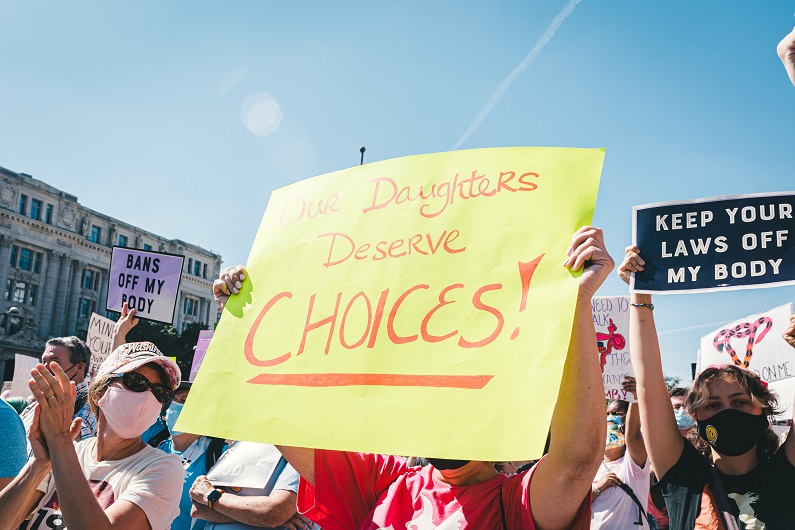
(Photo by Gayatri Malhotra on Unsplash)

For Highly Sensitive People Who Feel the Pain of the World

For Highly Sensitive People Who Feel the Pain of the World

Do you feel the pain of the world as a highly sensitive person?

Do you want to do something but don’t know where to start?

Do you tend to shut down when you feel overwhelmed?

Maybe you wonder if anything you do will even matter.

As a highly sensitive person who has felt the pain of the world since I was child, I get it. I know these anxieties and there are moments when I feel powerless too. The social and environmental issues I care about have felt exceedingly daunting this year.

To add to this, we’re living in a time in which most people are dealing with very real individual and family stresses. You may feel like you have enough on personal plate to serve the world around you.

Self-care and healthy boundaries are vital. It’s important to be able to recognize and honor when you have limited bandwidth. There are other times when you’ll have energy available to support others and to get active in causes you care about. There are times in which you’re energy will be best directed toward replenishing your reserves and simply tending to what’s in front of you.

I’ve been at this balance of personal and collective care for over 20 years. It took me a long time to establish sustainable ways of engaging that truly have potential to benefit the causes and people I care about and myself.

Once I did, I came to realize that taking action toward collective well-being is one of best ways to alleviate anxiety about the pain of the world.

Highly Sensitive People Who Feel the Pain of the World, Taking Action Is Key

In these current times, you’re bombarded with circumstances that lead you to feel like you have no control.

Anxiety can go into overdrive when you feel so much. You may feel powerless to do anything and stuck in a rut detached from a sense of purpose or agency.

Taking action helps to soothe anxiety because it allows the part of you that feels so anxious to experience the felt sense that you do have control over something…your actions. It also helps that anxious part witness and trust your courageous capacity.

It’s important to note that taking action need not be a burden or sacrifice that zaps your energy and lands you in depletion.

On the contrary, engaged action can be the very ground for you to empower your innate strengths and courage as you bring the depth of your humanity to life beyond your immediate circles and to the wider world to which you belong.

This can even be the place you thrive provided that you have a clear purpose and you work aligns within your strengths, energy, and circumstances.

However, it’s easy to get derailed into thinking nothing you do matters without an essential viewpoint.

Yoga Wisdom for Taking Action

You may have read my blogs or heard this teaching in my yoga classes, but it’s worth repeating a thousand times as a helpful perspective for activism, volunteer work, supporting loved ones, and even action for yourself.

This teaching comes from the Bhagavad Gita, which teaches us how to fully participate, live, and do our duties in worldly life with a stable mind and equanimity.

The primary teaching of karma yoga in this text is to do what is front of you to do because it is in accordance with that which is right and just while renouncing the results or fruit of the action. In other words, take selfless and beneficial outer action because it’s your duty or responsibility, but maintain an inner attitude of renunciation of the outcome.

You don’t control the results because there are countless other variables at play that contribute to the laws of cause and effect that cannot always be seen or known. On this same token, it’s hard to fully know if there’s a silver lining in a devastating setback.

Consider that you may plant seeds in your garden and be frustrated when a squirrel gets mischievous or the wind carries it away. Yet, maybe the squirrel or wind presented the neighbor down the street a joyful surprise and unexpected nourishment.

So many people get burned out or cynical about when their efforts don’t lead to the desired results.

From this perspective, you simply do what is within your power to support and uphold dharma, which means both your individual duty and universal natural law that benefits all living beings with the least amount of harm (ahimsa).

3 Key Considerations for Taking Action as a Highly Sensitive Person

1) Energy. HSPs take in a lot of information quickly and generally need time to cognitively and emotionally process. Get clear on what kinds of actions and environments feed and deplete your energy.  If you’re new to activism or community work, this may require some exploration to learn what fits with respect to your environment, time commitment, personal style, and means to contribute. In accordance with avoiding harm, you may explore ways to take action that don’t require a long-term commitment to start. For example, you may share fundraisers with your networks, join a letter writing campaign, attend a protest, or sign up for a text or phone banking session rather than embarking on an entire training for door-to-door political canvassing. Of course, don’t leave it at doing a thing followed by inaction, but do accurately assess what suits your energy capacity, processing pace, and need for rest.

2) Time. Some people thrive on routine and like to dedicate time each week to taking action. This is a great way to stay consistently involved. Yet, for many people, time availability varies due to other responsibilities and it can be challenging to multi-task for the HSP brain (fine, all brains). There may be weeks when all you can do is donate or show extra kindness to a stranger. There will be other weeks when you give substantially more time. Sometimes your focus needs to shift in and out depending on the circumstances and that’s okay. This means being both compassionate with yourself when you have a lot on your plate and honest with yourself when you have time or it’s possible to make time. When you find yourself spending lengthy time ruminating and feeling the pain of the world, take action.

3) Strengths. Identifying and being honest with your strengths goes hand in hand with energy because it affects the sustainability of your work in the world. You may have existing skills that can be tapped and you may have skills you need to develop. Yet, you need to know your strengths and what puts you in flow in order to discern how you can be most helpful to a cause or movement. If you absolutely despise talking to people on the phone and find yourself avoidant of conflict, campaign phone banking may not be the place you start. Yet, text banking may be an option that gives you time to respond properly. If you’re a creative HSP and/or introvert, you might take action in the form of a craftivism campaign. Maybe you’re a graphic artist or tech expert, you might support an organization with creating flyers or handing the back end of their website. Keep in mind that highly sensitive people are often great at “leading from behind” by uplifting others and supporting movements rather than needing to be headliner.

For highly sensitive people who feel the pain of the world…

There’s no question this can feel heavy and cause undue anxiety. Yet, you have the capacity to help relieve this anxiety by engaging your strengths and taking action for the well-being of all without added overwhelm or depletion.

If you want some ideas for how to take action in a way that suits your strengths and energy, I invite you to check out our next workshop on Activism for Introverts & HSPs w/ Omkari Williams.

Highly Sensitive Activists: Your Sustainable Fuel for the Long Haul

Highly Sensitive Activists: Your Sustainable Fuel for the Long Haul

Highly sensitive activist? Is this a thing? Honestly, I’m not sure, but I invite you to come forth and make it one because your care, complexity, and courage are needed.

Whether you already see yourself as a highly sensitive activist or are reluctant to consider yourself as such, I believe you’ll find the tips in this article helpful in how you can bring yourself to the world.

Highly sensitive people can make strong, effective activists. You may feel the injustices of the world deeply and want to have an impact. Yet, you might get stuck feeling overwhelmed and distracted and hesitate to get active. Or maybe you have been involved in activism and experienced burnout or compassion fatigue.

Stepping forth and holding focus while preventing depletion requires a true balance of beneficial action and supportive rest. Balance gets talked about a lot, but I want to dig a little deeper into the nuance of what this really means, as I discuss some of these key ingredients for sustained activism.

Today I want to share some tips with you for how to manage your energy and perspective as a highly sensitive activist so that you can get involved, stay engaged, and prevent burnout.

First, I’d like to say more about why I’m writing this. 

I recently wrote a call to action to my email list to bring forth the strengths of sensitivity in support of Black Lives Matter.

I heard from people who want to do something but question whether they can make a difference. I also heard from folks that are struggling to cope with anxiety amidst the many societal changes and personal hardships and don’t feel they have the energy to put forth.

I get the frustration and despair. And I hear that many of you are working through healing of your own.

I also know many of you face constant anxiety related to your experience as a person of color in a world in which you have to teach your children how not to get killed by those who are supposed to protect.

White readers, please read that again. Added daily anxiety because of the color of your skin.

Yes, it IS our collective duty to examine ourselves and systems we live in while advocating for policies that promote real social justice.

We must engage in deeper work that heals collective trauma that many Black and Indigenous People of Color (BIPOC) face every moment of every day.

But does your voice and action make a difference? What if you feel like you’re at your capacity?

I’d like to share how I build reserves and manage my own sustainable fuel needed for the long haul of individual and collective healing as a highly sensitive activist.

6 Tips for the Highly Sensitive Activist

1)  Know your overarching purpose. Highly sensitive people thrive on purpose. Get in touch with your “why” behind your actions. Knowing what you’re committed to fighting for will help you regroup and refocus when things get tough.

When I consider my purpose, I draw wisdom from yoga teachings and social work values that have informed my life. You may have other wisdom to draw from, here are mine:

  • Yoga asks me to live in accordance with dharma, which includes taking wise, just, and beneficial action toward that which upholds collective good for all beings and the planet.
  • Social work perspective asks me to apply systems theory to understand how environments and individuals interact and take action at the point of this intersection.

Both ask me to listen to the experiences of others. And they ask me go beyond myself and the people closest to me and make it clear that it’s incumbent upon me to widen my circle of care from my individual reality to the greater good.

2) Take beneficial action without attachment to the outcome. This might be one of the most critical perspectives that helps me keep going when it feels like the world is falling apart.

The problems of the world can feel overbearing to a highly sensitive activist. There are moments when you’ll wonder if your efforts are pointless. In those moments, I remember Krishna’s words in the Bhagavad Gita (paraphrased from a yoga text about conflict in a setting of conflict):

You may not control your environment, other people, or even the results of your actions. Yet, you DO have control over your own actions. Do your duty for the sake of the action itself and not the fruit of those actions.

Of course, expectations or desired outcomes are normal and necessary. Without them, you may not act. The teaching here is that you are responsible for just action toward collective good, even if it doesn’t yield your intended outcome. (Also embedded here is that there is always more than meets the eye and the ripple effects of your actions, karma, are unknowable.)

Adopting and living this perspective can free up your busy HSP brain for other matters. So…write the letter. Create provocative art. Donate money. Canvas your neighborhood. Do the right thing regardless of the immediate results (of course, knowing that sometimes the course of action will need to be reevaluated).

3) Name and celebrate successes. Just because you don’t control the full results of your actions, doesn’t mean that the collective contributions and positive outcomes shouldn’t be recognized. Systemic change is a slow process made up of many smaller milestones.

Even though there’s urgency, pay attention to the little victories and celebrate them. Incremental successes can be the fuel that keeps you and your community going and builds broader support for the cause.

Consider the concept above of not knowing the full ripple effects of your actions. Likewise, the results of your actions will ripple out into the future beyond your lifetime.

Take a look at what the first 10 days of sustained protests accomplished for Black Lives Matter.

4) Consider engaged action as healing action. When you have a lot on your plate, you may feel like you don’t have much energy left to take action. You might feel like you need to focus on yourself right now.

Self-care is important. At the same time, engaged action is also an empowering vehicle for healing and managing the other challenges of life.

If you struggle with anxiety or are working through trauma, you know how impactful it is when you tap into your sense of personal agency. Personal agency brings the locus of control back to you.

Engaged action in your own life reminds you of your resilience and capacity. Engaged action in your community reconnects you to the depth of your humanity and immerses you fully in life. Both play essential roles in individual and collective healing journeys.

You don’t have to do all the things as a highly sensitive person. Consider your skills and how you can apply them to affect positive change. Determine your bandwidth and set a plan of action for yourself within those parameters. Start small and grow from there.

5) Rest and restore. Self-care is a term that gets thrown around so much these days as temporary pleasure that it makes many of us want to throw up a little (as one person said during a recent yoga and reflection group)… the same way that “yoga as an escape” bothers many of us teachers since it is so far from the purpose of yoga.

Self-care is not an excuse to avoid discomfort or what’s in front of you to do. It’s making supportive (non-shaming, non-prescriptive) choices. It’s using discernment to set boundaries and know when to say no. It’s carving out space for your grief and emotions.

Notice when you feel resistant to resting. This may be when you need it the most.

Restful practice is vital to replenishing your highly sensitive reserves and capacity so that you can continue to show up tomorrow for yourself, those around you, and your work.

6) Choose your battles wisely. This is something I constantly have to reign myself back in with. And it relates to when and how you use your voice.

If you’ve been following the discussions on anti-racism, you know that many activists are asking you to have that “hard conversation with your racist uncle” or “call out racist behavior” on social media.

This is incredibly important and we need to take that call to heart and live it. Yet, without nuance as to when and how to do this, you can easily find yourself on a fast road to depletion and massive frustration. This doesn’t mean you don’t do the tough thing, it just means to apply consider when and how you direct your energy. Here are some questions to keep in mind:

  • Have you had the same circular conversation with your relative at every family gathering? If so, consider preserving your energy. Maybe you express your view and set boundaries, but if you’ve been down that road, don’t take the bait.
  • Are you in a work meeting in which your Black colleague is being asked to do the emotional labor of speaking for all Black people? This might be a time to say something. Yet, the when and how require tremendous discernment based on the context, power dynamics, and manner in which you say something. Here are some considerations for allyship worth reading.
  • Is your high school buddy who is a generally kind person sharing memes with racist undertones? Consider “calling him in” with a private message rather than shaming him on his Facebook page. He may be more likely to listen (and even remove the post).

Highly sensitive activist, you’re going to get tired and you’re going to make mistakes. Yet, your passion, voice, and engaged action are needed for collective healing.

How to Deal with Difficult Conversations and Feelings

How to Deal with Difficult Conversations and Feelings

The following article was originally written and published in 2017 under the title “How to Deal with Difficult Conversations and Feelings After Charlottesville” following a white supremacist terrorist attack in Charlottesville, VA. The recommendations are still relevant for how to deal with difficult conversations across current contexts.

The Charlottesville headlines have dwindled, but have your feelings? How about the people in your life with opposing perspectives? Have the controversies subsided?

My guess is that the feelings are still there, especially for those of us who are sensitive and care deeply about social justice.

The violent racism we saw in Charlottesville along with the political aftermath left many of us feeling outraged, sad, helpless, and anxious. That’s a healthy human response to a horrific situation.

But you’re not hearing from me until now for a reason. I deliberately chose to take time to respond to the events in Charlottesville. I knew that impulsive reactions to share fear-invoking posts and start wars on Facebook would only impede my desire to advance understanding.

I also think it’s important to keep these conversations going after the headlines recede.

If you’re a sensitive person, chances are that words and actions that hurt people bother you at your core. You may also be likely to pick up on subtle prejudice and microaggressions. Awareness can be both a strength and a source of frustration as we wonder what we can do.

After some reflection, I’ve decided to share a few tips for interacting with the people around you and taking empowered action. I think sensitive souls have a unique gift to carry out all of these.

How to Deal with Difficult Conversations and Feelings

1. Remember that we are all products of social conditioning.

Conditioning refers to learned thoughts and behaviors we adopt unconsciously as a result of reward, punishment, and opinions of those in our environment. We learn who we should and shouldn’t be and who others should and shouldn’t be. We create stories about ourselves and how the world works for our own sense of identity and belonging.

Anything that poses a threat to those stories generally results in feeling vulnerability and fear. We’ll do anything to protect the parts of us feeling scared and vulnerable. We may place blame, get defensive, become angry, or shut down.

We are each a product of the weaving of our biology and environment. Traumatic experiences, in which we feel little control in life, can also form our beliefs and modes of operation for living in the world. It’s human nature to want to feel in control, especially when we’ve felt powerless.

You may have friends or family that see things differently from you. If you want to have a relationship with these people, it helps to consider their experiences and conditioning.

When I feel angry or irritated with someone, I use two visualizations to help me:

  • I picture the adult as a child. What might it have been like for them to be a child? What narratives were they told by their parents, religion, etc.? What hardships did they face? What message my that leave a child with?
  • I imagine focus on the person as a brain and body. This might sound strange, but it helps me to see the other with a brain that has been wired, at least in part, by their life experience. Knowing what we do about the brain’s neuroplasticity, it also gives me hope that we can all grow.

When I talk about developing understanding and compassion, this is not about condoning racism, sexism, or hate speech. It’s seeing the truth about both the limitations and potential of those in our lives. It also helps us cope with difficult realities and build resilience.

2. Avoid shaming.

Researcher, author, and public speaker Brene Brown recorded a Facebook live video just after Charlottesville. In it, she emphasizes the need to continue to have difficult conversations and how important it is to have these conversations without shaming and dehumanizing others.

I know how easy it is to get caught up in the thick of an argument and lose your calm. When things get heated, it’s easy to fall into calling names or shaming people. We may react with sarcasm or eye-rolling. When we say things like, “How could you believe…?” or “That’s ridiculous to think…”, the other person is likely to hear, “Shame on you.”

It’s not a constructive communication approach, and it’s not an effective social justice tactic. When we shame, we do little to advance social justice and get our message heard. 

You’ve likely experienced pain of shame. Do you best to avoid slinging it at others.

3. Spark understanding.

This is not easy. I know… But truthfully, arguing about facts and ideology usually doesn’t get us very far if a person’s identity feels threatened. This may be futile, especially when the “facts” originate from differing ideologies.

If we don’t argue facts, how do we dialogue?

First, it’s important to clarify the other’s stance without simplifying that stance into your terms. Ask questions without assumption. Identify the fear and get get curious so you can begin to understand it. You might need to read the sources of information that the other is receiving in order for your point to be heard as well.

Do your best to use “I” statements such as, “I feel really hurt when my experience in the world is disregarded,” and questions such as, “Can you help me understand what leads you to this conclusion?” Avoid accusatory assertions.

4. Check in with your nervous system.

Anger, frustration, and grief are normal and healthy emotions. Yet, constructive dialogue comes when we are grounded, calm, and curious. It may not always be the right moment for you or the other. Be deliberate about when you choose to enter and have difficult conversations.

If you notice your heart rate increasing or body tensing, you might try slowing your exhale to calm your nervous system or ground by sensing the surfaces beneath you. Or come back to one of the visuals I mentioned above.

If you feel emotionally flooded, it’s okay to step away and come back to the conversation later. You can say something like, “I’d like to continue this conversation with you, but I feel like we could use a little breather before continuing. Psychologist John Gottman advises taking at least 20 minutes for your nervous system to regulate. Key to this is doing something completely unrelated to the conflict (go for a walk, listen to music, etc.) rather than focusing on or replaying the conflict.

5. Speak up and say something.

This is where we have to be keenly aware and work the balance between mindful dialogue and standing up for social justice. There are times when we need to speak up for ourselves and for others. When white supremacy shows its face or you witness injustice, we can’t just be silent. We must speak up in our families and communities, but the when and how take some discernment.

6. Support a cause doing meaningful work.

If you want to make a change, empower your ability to take action. Donate. Get active. Call your elected officials.

I learned about a Chicago-based organization, Life After Hate. This non-profit was founded by former members of alt-right violent extremist movements who made a transformation. They help radicalized individuals disengage from extremist movements and rehabilitate them to counter the seeds of hate. These folks are doing amazing work to transform hate.

Final words on how to deal with difficult conversations and feelings…

Whatever you speak and do, aim for it to come from a grounded place. Anger is a valid emotion, but we must turn it into the fuel to advance love, justice, and great change.

How do you deal with difficult conversations and feelings? Please share in a comment below!