As Pride Month draws to a close, I want to speak to the hope still ahead—despite the heartbreak, remind you of the values that shape my work, and share how I’ve come to recognize my own queer identity over time.
It’s easy to feel disheartened (and scared) when the LGBTQ+ community is being relentlessly targeted by both policy and culture. Book bans, anti-trans legislation, attacks on bodily autonomy, and threats to same-sex marriage are sweeping across the U.S. and beyond.
And still, there’s so much people power building through intersectional movements across the globe. So, let’s begin with some reasons to celebrate:
Nearly 800,000 people showed up to Chicago’s Pride Parade this past weekend.
In Hungary, where authoritarian leader Viktor Orbán called for a ban on Pride and threatened fines and imprisonment, Budapest’s Pride March saw a record turnout with an estimated 100,000–200,000 people showing up. That’s up from 35,000 last year.
Given that the current U.S. government is following Orbán’s playbook closely, this resistance and visibility can give us strength and hope.
Onto something more personal… my own queer identity
Last year, I shared briefly about reflecting on my queerness. I want to share a little more—though I’m still asking a lot of questions.
While my relationships have been with cisgender men, my orientation extends beyond the heteronormative script and includes people of all genders.
I’ve hesitated to call myself queer. I don’t want to take space that isn’t mine or dilute what it means to be queer. I’m cisgender, my partner is a cis man, and I don’t face the marginalization many queer and trans people do. I can move through the world without fear of being targeted for who I love or how I express my gender.
Yet, omitting this part of myself feels like a quiet erasure of the many ways queerness shows up.
Through conversations with my partner, queer friends, and my own reflection, I’ve decided that visibility matters more than my hesitations. We need more honest expressions of ourselves—not fewer. Queer identity is an umbrella with a wide, varied landscape, as expansive as nature itself.
Part of me remains unsure if “queer” is mine to claim. But I know I don’t fit neatly into a heteronormative mold. Even as I continue to understand this part of myself, I believe that naming matters if it can help others feel safer in the spaces I hold.
Still, I recognize that my risk level of being “out” is very different than most in the queer community.
Because access to basic rights and safety remains unevenly distributed.
For many LGBTQ+ people, the path to belonging begins in exile—from families, spiritual communities, and institutions never built with queer people in mind.
We are in an era of rising violence, system harm, and exclusion targeting trans and non-binary people, people of color, and those at the intersections of multiple marginalized identities.
These aren’t distant issues. They show up in our communities, and sometimes, in my work.
Recently, two people did not register for a retreat because it was open to gender-diverse people. One of them said she could be “respectful,” but that she could not affirm what she called “trans ideology.”
After some discussion, I told that her my retreats wouldn’t be a good fit. Protecting safety and upholding social justice come first, even when it costs me clients.
I know that for some, the idea of gender beyond the binary can feel unfamiliar or confusing. I have a lot of patience for those who are genuinely open to learning. This isn’t about having all the answers. I’ve stumbled plenty along the way myself.
But I want to say this clearly:
The existence of trans people is NOT an ideology.
Gender is one’s internal sense of self, which, like so much in biology, doesn’t fit into neat categories. Trans people have always existed across cultures and time and they always will.
My retreats are built on a foundation of inclusion for those with marginalized identities. Thus, I will always prioritize the safety, dignity, and belonging of queer folks, including trans, nonbinary, and gender-diverse people in our gatherings. I hope you will too.
I bring together those whose nervous systems don’t match dominant cultural expectations to create brave, affirming spaces where we celebrate diversity.
Just as queer ecology teaches us that biodiversity strengthens an ecosystem, the existence of queer identities strengthens our communities. Our differences—like those in nature—are essential expressions of life’s beauty and resilience.
When we create spaces where everyone’s wholeness is welcomed, we begin to repair the systems of separation that have fractured us.
And eventually, the tide will turn.
The arc of change is somewhat predictable: visibility grows, resistance swells, and eventually, acceptance prevails. History has shown us this pattern time and again.
Some day, being trans or nonbinary will no longer be seen as controversial or political—but simply as part of the natural, beautiful diversity of being human.
Until then, we can bring “some day” closer.
Through the spaces we create.
Through the language we use.
Through the way we listen and affirm.
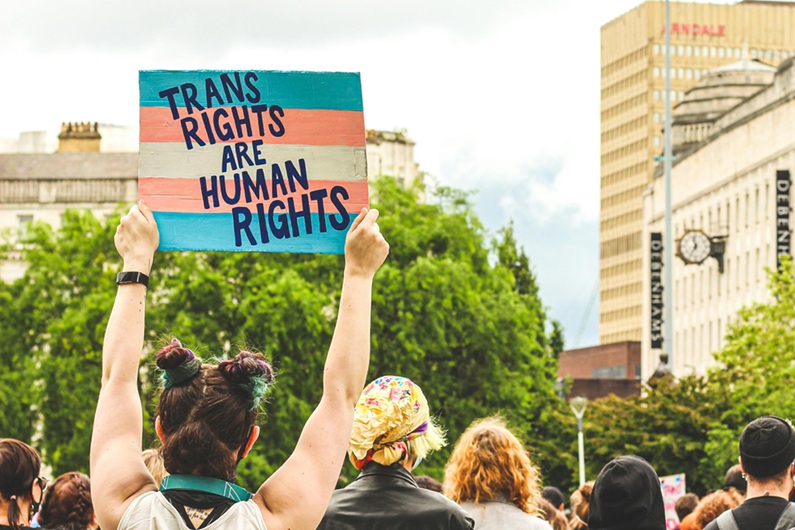
Through the human rights we fight to protect.
I’m in the process of adding a values page to my website. If you have questions about joining a Retreat or HSP Circle, reach out to info@melissanoelrenzi.com. I’m happy to have a chat!
Seeking Meaningful Travel Without the Overwhelm?
Success! Look for my welcome email in your inbox. If you don't see it, check your SPAM!